
Test All Four EPA 608 Sections, Save Retest Fees for U.S. HVAC Techs

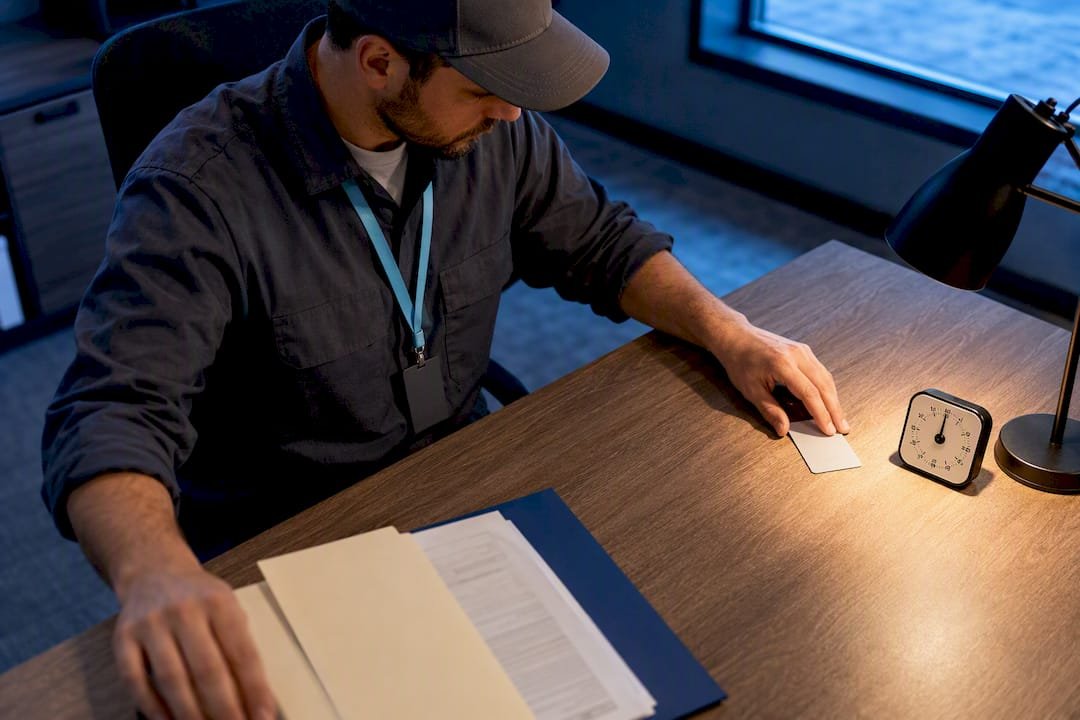
You need EPA 608 certification to legally purchase, handle, or work on any equipment containing refrigerant. For most residential and commercial technicians, Universal certification (Core plus Types I, II, and III) is the practical choice because it covers every equipment category. Your next move is to pick an EPA-approved certifying organization, register for Core and the type sections your work requires, and start studying.
TL;DR:
- Most residential and commercial technicians should aim for Universal certification since it covers all equipment types and eliminates the need for retesting later.
- The certification exam consists of four sections, each requiring a 70% pass rate, with core knowledge being essential for all types, especially leak detection and pressure-temperature chart reading.
- Testing is done through EPA-approved providers, with fees ranging from $25 for simple types to $200 for full Universal certification, and open-book policies vary by provider.
- Certification proof is required by refrigerant suppliers before purchase, and venting refrigerants is strictly prohibited with proper recordkeeping and disposal rules in effect.
- Certification never expires, but maintaining a digital copy is wise because verifying credentials can become difficult if the original testing organization closes.
Table of Contents
- What does EPA 608 certification actually require?
- Which certification type do you actually need?
- How do you get EPA 608 certified?
- How should you study for the EPA 608 exam?
- What changes once you’re certified?
- What do techs get wrong about the EPA 608 exam?
- How does HVAC Prime support newly certified technicians?
- Where can you verify EPA 608 rules and providers?
- Sources
What does EPA 608 certification actually require?
Section 608 of the Clean Air Act, codified at 40 CFR Part 82, Subpart F, makes certification federal law for anyone who works on equipment that could release refrigerant into the atmosphere. This isn’t a suggestion from a trade association. It’s a legal mandate that applies whether you’re a solo contractor or working for a national mechanical company.
The rule triggers on specific hands-on activities, not job titles. If you do any of these, you need to be certified first:
- Attaching or detaching gauges and hoses to a refrigerant circuit
- Adding or removing refrigerant from a system
- Breaching a sealed refrigerant circuit for repair or replacement
- Disposing of appliances that still hold refrigerant charge
There’s one carve-out worth knowing. Apprentices can perform these tasks without holding certification themselves, but only under close and continuous supervision from a certified technician working alongside them. That supervision has to be real and constant, not a certified tech signing off from another job site. Once you’re working independently, the exemption disappears.
Which certification type do you actually need?
EPA 608 splits into four categories, and picking the right one depends entirely on the equipment you touch. Getting this wrong means retesting later, so match your certification to your actual job scope from the start.
- Core: Required for every certification type. Covers ozone depletion basics, recovery techniques, and regulations. No exemptions here.
- Type I: Small appliances holding five pounds or less of refrigerant. Think window units, refrigerators, and vending machines.
- Type II: High-pressure and very high-pressure systems. This covers most residential central air conditioners, heat pumps, and split systems, which makes it the practical minimum for residential service work.
- Type III: Low-pressure systems, primarily large chillers used in commercial and industrial buildings.
Universal certification means you’ve passed Core plus all three Type sections. It’s widely recommended for residential and commercial technicians because it opens every job type without restriction. If you already know you’re only ever going to service window units for a specific employer, Type I alone might suffice. But most techs building a career end up needing Universal eventually, so testing for it once beats retesting three separate times.
How do you get EPA 608 certified?
The EPA doesn’t administer exams or issue cards itself. You test through an EPA-approved certifying organization, and providers like ESCO Institute, HVAC Excellence, Mainstream Engineering, and RSES each run their own scheduling, proctoring, and pricing.
Here’s the process from start to finish:
- Pick your provider. Confirm they’re EPA-approved before paying anything, and check whether they offer in-person testing centers, live-remote online proctoring, or both.
- Register for the right sections. You need Core plus each Type you’re targeting. If Universal is the goal, register for all four sections up front to save on repeat fees.
- Understand the proctoring rules. Core has to be proctored, closed-book, to count toward Universal. Some providers let you take Type I open-book online, but Core and the other Type sections generally require proctored testing for Universal eligibility.
- Sit the exam. Each section runs 25 multiple-choice questions, and you need a 70% passing score, meaning 18 correct answers, on every section attempted.
Pro Tip: Double check your provider’s specific rule on open-book Core before you register. Some techs pass Core open-book, only to learn later that it doesn’t count toward Universal, and they have to retake it proctored.
Exam day mechanics are straightforward. Bring photo ID, expect a timed session, and if you pass, many providers issue printable proof of certification immediately. Fees vary a lot by format: mail-in Type I testing can run as low as $25, while proctored Universal exams at some centers run up to $200. If you fail a section, you can retake it, though most providers charge a retest fee and may require a waiting period.
How should you study for the EPA 608 exam?
Start with Core. It’s the foundation every other section builds on, and skipping ahead to Type material without nailing ozone science and recovery procedure basics tends to backfire on exam day.
Use EPA’s own guidance documents alongside your provider’s official manual, then layer in practice tests once you’ve read through the material once. Practice tests matter more than most techs assume. Candidates who run multiple timed practice exams before test day tend to pass faster and with fewer retakes than those who walk in cold.
Focus your drilling time on the topics that show up repeatedly across all sections:
- Recovery and recycling procedures for each equipment class
- Leak detection methods and repair timelines
- Reading pressure-temperature (P-T) charts correctly under exam pressure
Memorize refrigerant classifications and recovery requirements cold. If your exam allows reference materials for anything, it’s usually chart lookups, not core regulatory concepts, so don’t waste study time trying to memorize what you can look up.
One newer wrinkle worth flagging: A2L refrigerant safety training is increasingly baked into Core and Type II study material, and several manufacturers now require separate A2L training to honor equipment warranties. It’s not part of the original 1990s-era Section 608 rule, but it’s become a practical requirement on the ground. HVAC Prime’s regulatory compliance guide breaks down where A2L fits into current refrigerant handling rules, and the blog covers ongoing regulatory changes worth tracking as you study.
What changes once you’re certified?
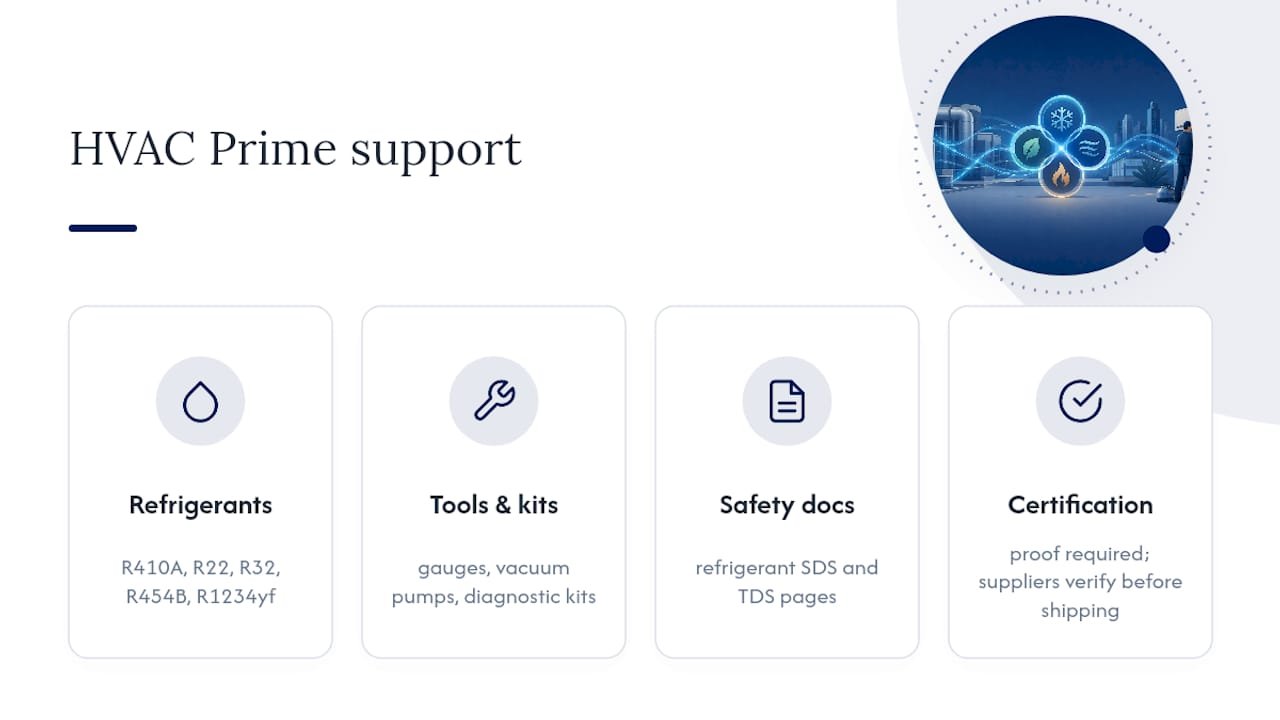
Certification is your purchasing credential as much as your legal permission slip. Most refrigerant suppliers, including wholesale distributors, will ask for proof of EPA 608 certification before selling you cylinders, and that’s not a formality. Selling refrigerant to an uncertified buyer creates real liability for the seller.
A few compliance basics carry real weight once you’re in the field:
- Venting is prohibited. Federal law bars intentionally releasing refrigerant into the atmosphere during service, repair, or disposal, with narrow exceptions for de minimis releases during normal recovery.
- Keep records. Leak repairs, refrigerant added or recovered, and disposal documentation should be retained; some equipment categories carry specific recordkeeping thresholds.
- Dispose of cylinders correctly. Empty or reclaimed cylinders still need to go through proper channels, not the scrap bin.
HVAC Prime’s guide on refrigerant cylinder disposal walks through the correct procedure, and the refrigerant SDS and TDS downloads page gives you safety and technical data sheets for the refrigerants you’ll be handling most often.
One more thing worth knowing: your certification never expires. There’s no federal renewal cycle. Keep a digital copy of your certificate anyway, since proving prior certification gets harder if your original testing organization goes out of business and you need a new provider to verify your credential years later.
What do techs get wrong about the EPA 608 exam?
Most failed attempts I’ve seen trace back to two habits: skimming Core because it feels like “the easy section,” and assuming open-book means low-stakes. Core is where P-T chart logic and recovery sequencing get tested hardest, and if you’re sloppy there, it shows up again in every Type section since they all build on it.
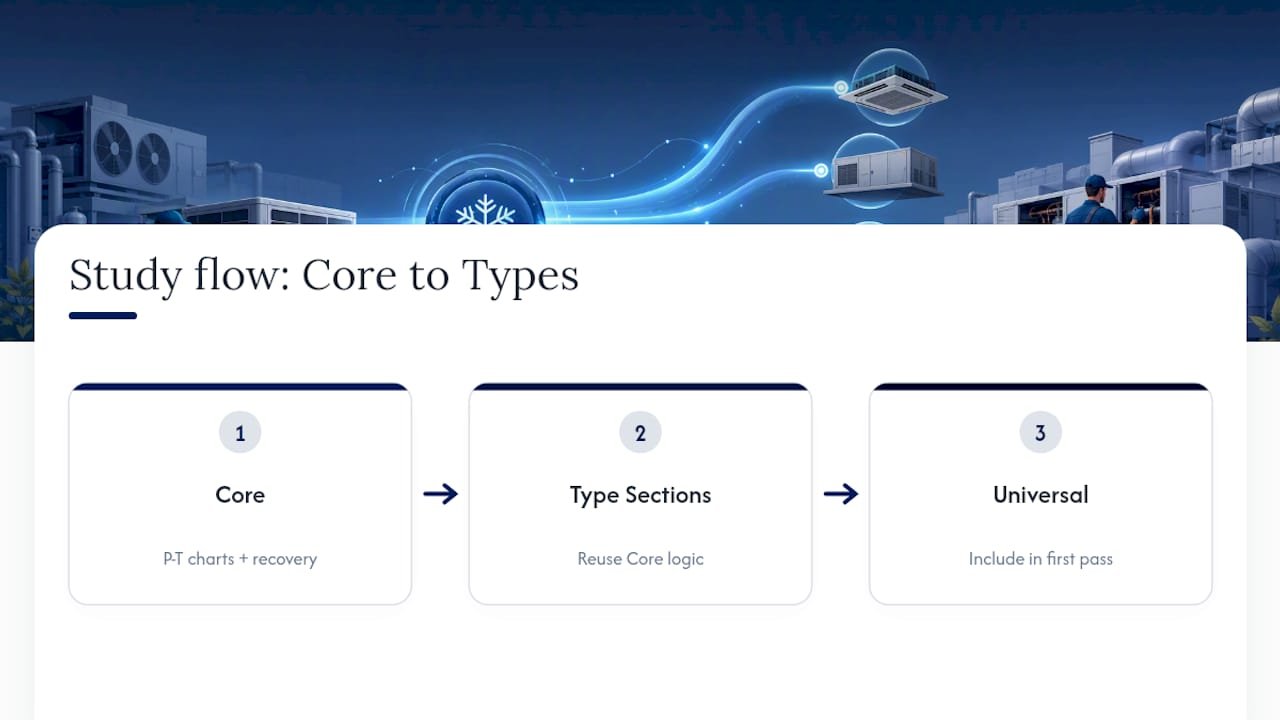
The other mistake is treating Universal as optional until a job specifically demands it. By then you’re paying for a rushed retest instead of building it into your first study pass. If you’re studying anyway, test for all four sections at once.
For deeper compliance reading beyond exam prep, HVAC Prime’s EPA refrigerant regulations guide and refrigerant SDS/TDS library cover the regulatory detail that keeps changing year to year, particularly around A2L handling.
— Planet
How does HVAC Prime support newly certified technicians?
Passing the exam gets you the credential. Stocking your truck is the next problem, and that’s where a lot of techs hit their second wall: sourcing refrigerant fast, at a price that doesn’t eat the job margin.
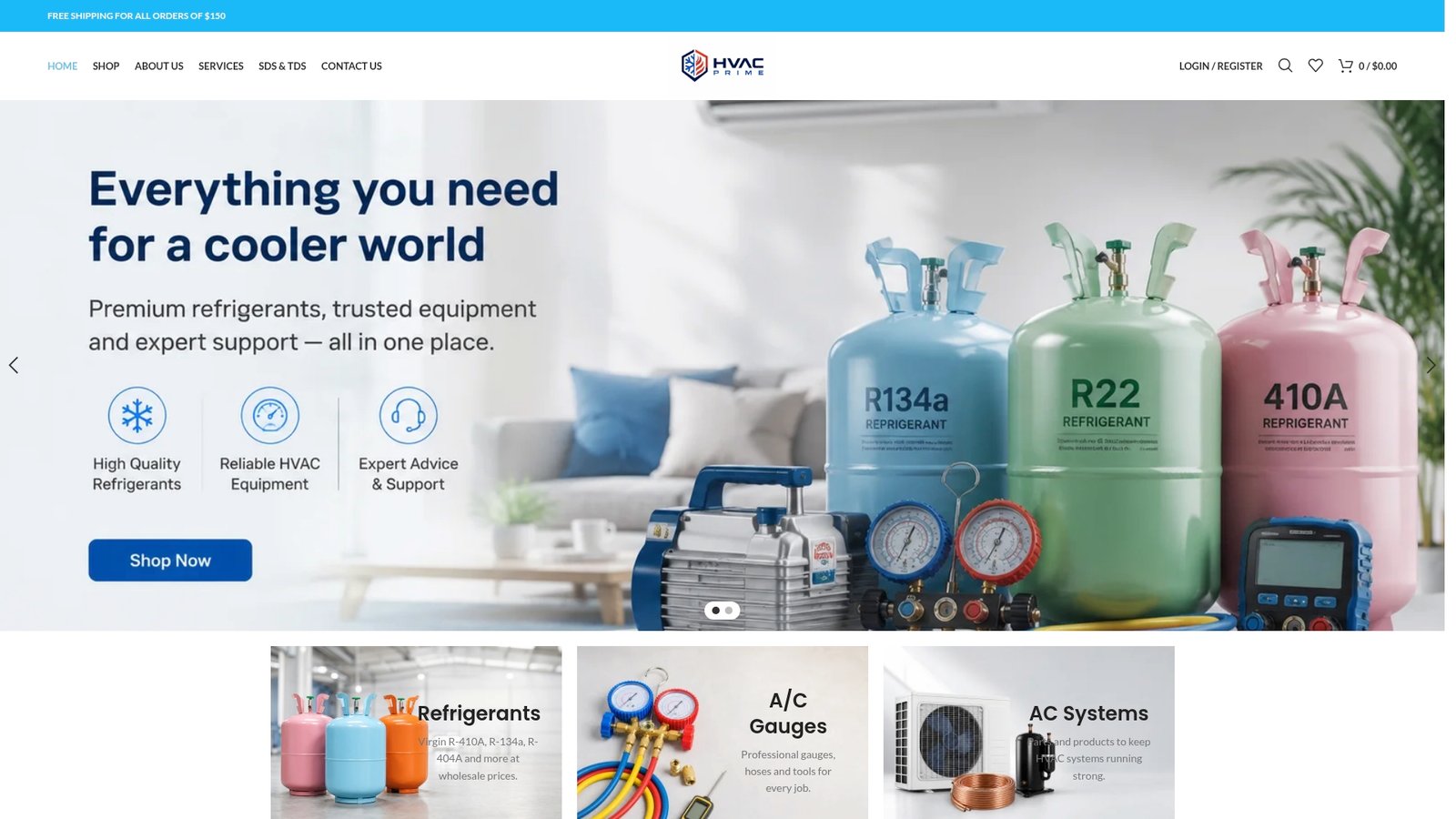
HVAC Prime carries wholesale virgin refrigerants across the blends techs actually use daily, R410A, R22, R32, R454B, R1234yf, and more, alongside the gauges, vacuum pumps, and diagnostic kits you need to put your new certification to work. Have your certification proof ready when you order; most suppliers verify it before shipping refrigerant.
Browse the refrigerants product category for cylinder pricing and availability, check the refrigerant SDS and TDS page for the safety data sheets your employer or AHJ may require on file, and if you’re outfitting a new service truck, the refrigerant kit selection covers common accessories for Universal-certified techs. Fast shipping means you’re not waiting on refrigerant while a job sits half-finished.
Where can you verify EPA 608 rules and providers?
For the regulation itself, go straight to the EPA’s Section 608 Technician Certification Requirements page, which lists approved certifying organizations and the legal text behind every rule in this guide. For provider-specific testing formats and pricing, check ESCO Institute’s EPA 608 training page directly. HVAC Prime’s refrigerant regulations guide rounds out the compliance side with practical, field-level detail.
Sources
- Section 608 Technician Certification Requirements | US EPA
- ESCO Institute — EPA 608 training and testing options
- Understanding EPA 608 Certification: Exam Types & Costs




 HVAC
HVAC Automotive
 Refrigerant Diagnostics Kit
 Water Heaters