
What Is the Legal Way to Dispose of a Refrigerant Cylinder?

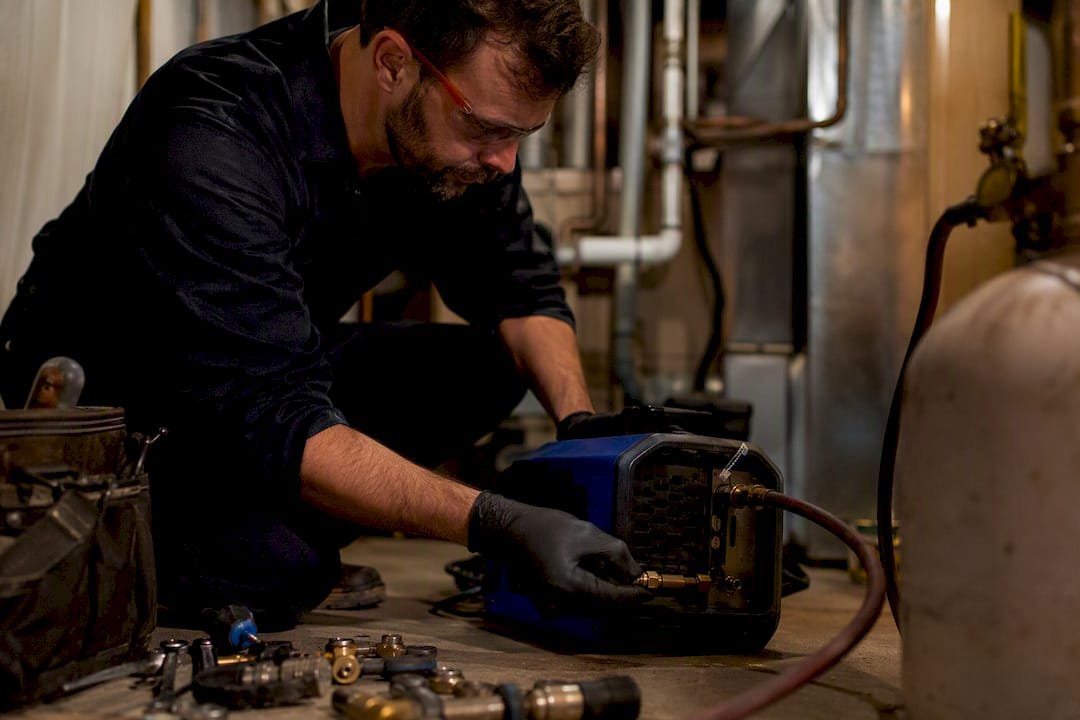
Venting is illegal, full stop. To lawfully dispose of a refrigerant cylinder, you must remove the residual “heel” and either send the cylinder to a certified reclaimer, refrigerant supplier, or final processor, or evacuate it yourself to 15 in-Hg and attach a signed certification. The EPA governs this under Section 608, and a 2028 enforcement date tightens heel-removal rules for disposable cylinders specifically.
TL;DR:
- Disposing of a refrigerant cylinder legally requires removing the heel and obtaining signed certification documenting a vacuum of 15 in-Hg or more.
- The EPA’s upcoming 2028 enforcement deadline mandates heel removal for disposable cylinders before they enter the scrap recycling process.
- Proper documentation, including logging refrigerant type, recovered weight, and destination, is critical to avoid rejection at scrap yards or reclaimers.
- Using compliant recovery equipment and analyzers ensures vacuum levels are accurate, preventing rejection due to inadequate evacuation or mixed refrigerant heels.
- Storing and transporting cylinders according to DOT regulations, including labeling and segregation, is essential for compliance and safety.
Table of Contents
- Refrigerant Cylinder Disposal Checklist for Technicians
- What Does the EPA Require Before You Discard a Cylinder?
- How Do You Evacuate a Cylinder and Write the Certification?
- Where Should You Send a Used Refrigerant Cylinder?
- Are There DOT Rules for Storing and Transporting Empty Cylinders?
- What Records Do You Need to Keep for an Audit?
- Why Most Rejections at the Scrap Yard Are Preventable
- Compliant Recovery Gear and Documentation From Hvac-prime
- Sources
Refrigerant Cylinder Disposal Checklist for Technicians
Before a cylinder leaves your truck or shop, run through this sequence. It’s the difference between a scrap yard accepting your load on the spot and getting turned away at the gate.
- Confirm the cylinder type. Disposable (non-refillable) cylinders follow different rules than refillable DOT cylinders. Label it clearly.
- Recover the heel. Use EPA-certified recovery equipment, or route the cylinder to a reclaimer or supplier that will pull the residual charge for you.
- If self-evacuating, hit 15 in-Hg. Confirm the vacuum level on your gauge before disconnecting.
- Write the certification statement. Include your name, business address, the date, and a statement confirming the vacuum level reached.
- Log the disposal. Record refrigerant type, estimated recovered weight, and destination.
- Call ahead. Local scrap yards and suppliers vary widely on what paperwork they’ll accept. Confirm before you drive over with a truckload of empties.
Pro Tip: Keep a stack of pre-printed certification forms in your service van. Filling one out on-site takes thirty seconds; showing up at the scrap yard without one can cost you the whole trip.
What Does the EPA Require Before You Discard a Cylinder?
The EPA’s Section 608 program defines three actions technicians need to keep straight: recover means pulling refrigerant out of a system without necessarily testing or processing it; recycle means cleaning refrigerant for reuse without meeting all reclamation purity standards; reclaim means restoring refrigerant to a purity level verified by chemical analysis, typically at a certified reclaimer. EPA’s definitions draw a hard line between these terms because your documentation has to say which one actually happened to the gas.
Recent regulatory updates under the ER&R program specifically target disposable cylinders. Two dates matter for your shop calendar:
- January 1, 2026: restrictions tighten on the sale of unreclaimed refrigerant under certain provisions.
- January 1, 2028: heel removal becomes a hard compliance requirement for disposable cylinders before they can enter the scrap stream.
Final processors will increasingly ask for proof of compliance rather than take your word for it, and industry coverage of the ER&R rollout suggests scrap yards and reclaimers are already adjusting intake procedures ahead of the deadline. Get your paperwork habits locked in now, not in late 2027.
How Do You Evacuate a Cylinder and Write the Certification?
You don’t need a lab to do this correctly, but you do need the right gear and a documented process. Here’s the sequence that keeps you compliant.
Equipment check first. Confirm your recovery machine meets EPA performance standards for the refrigerant type you’re pulling. Recovery kits and refrigerant analyzers built for this exact task make the vacuum reading easier to trust, since guessing at heel volume is how cross-contamination happens.
- Connect recovery hoses to the cylinder valve, keeping the line as short as possible to reduce trapped volume.
- Run the recovery machine until your gauge holds steady at 15 in-Hg or deeper.
- Hold the vacuum for a few minutes to confirm no residual pressure is bleeding back into the cylinder.
- Disconnect and immediately tag the cylinder as evacuated.
- Write the certification: your name, business address, the date, the vacuum level achieved, and your signature.
That certification is the whole ballgame. Under 40 CFR § 84.116, a signed statement documenting the vacuum level is what lets a final processor legally accept the cylinder without redoing your work.
Never vent to atmosphere and never refill a disposable cylinder. Both are prohibited, and refilling a cylinder never designed for reuse is also a straightforward safety hazard. Pro Tip: An analyzer confirms the gas type before you pull it, which matters more than it sounds. Mixed refrigerant heels are the fastest way to get an entire batch rejected by a reclaimer.
Where Should You Send a Used Refrigerant Cylinder?
Three types of businesses handle disposal, and each expects something slightly different from you.
- Certified reclaimers process the heel and restore refrigerant to reusable purity. Send them cylinders when you want the gas recovered and reclaimed, not just discarded.
- Refrigerant suppliers and wholesale distributors sometimes accept disposables as part of a take-back arrangement, particularly if you’re a regular buyer. Ask before assuming this applies to your supplier.
- Final processors and scrap metal recyclers take the empty cylinder for material recycling once refrigerant is out. They almost always require a signed certification statement or an existing contract confirming recovery, since EPA disposal guidance puts liability on them if refrigerant escapes after acceptance.
The single biggest reason cylinders get turned away at the gate is missing or vague documentation. Call ahead, ask exactly what form of proof they want, and bring chain-of-custody records showing where the cylinder came from and who evacuated it.
Are There DOT Rules for Storing and Transporting Empty Cylinders?
Yes, and they matter even after the refrigerant is out. An “empty” cylinder can still hold residual pressure and, depending on the refrigerant, a mildly flammable trace.
- Keep DOT markings and labels intact on the cylinder until final disposal, even if the label seems irrelevant once it’s evacuated.
- Store cylinders segregated by refrigerant type in a ventilated area away from ignition sources.
- Use basic PPE, gloves and eye protection, whenever handling valves or fittings.
- Call a licensed HAZMAT carrier for large-volume transport runs rather than overloading a refrigerated truck or service van.
- Never pierce or puncture a cylinder as an improvised evacuation method. It’s unsafe and it voids any compliance claim you’d otherwise have.
What Records Do You Need to Keep for an Audit?
Keep it simple and consistent. Every disposal record should include the date, your name and business address, the recipient entity’s name, the vacuum statement or processing note, and your signature. Retain these for three years under the certification alternative outlined in 40 CFR § 84.116.
- File by date and cylinder ID, not by job number, so audits go faster.
- Use one standardized template shopwide so no tech invents their own format.
- Hand a copy to the final processor at drop-off, not after.
Why Most Rejections at the Scrap Yard Are Preventable
Most cylinder rejections aren’t regulatory disputes. They’re paperwork problems a five-minute template fixes. Shops that standardize their certification form and train every tech to fill it out the same way rarely get turned away.
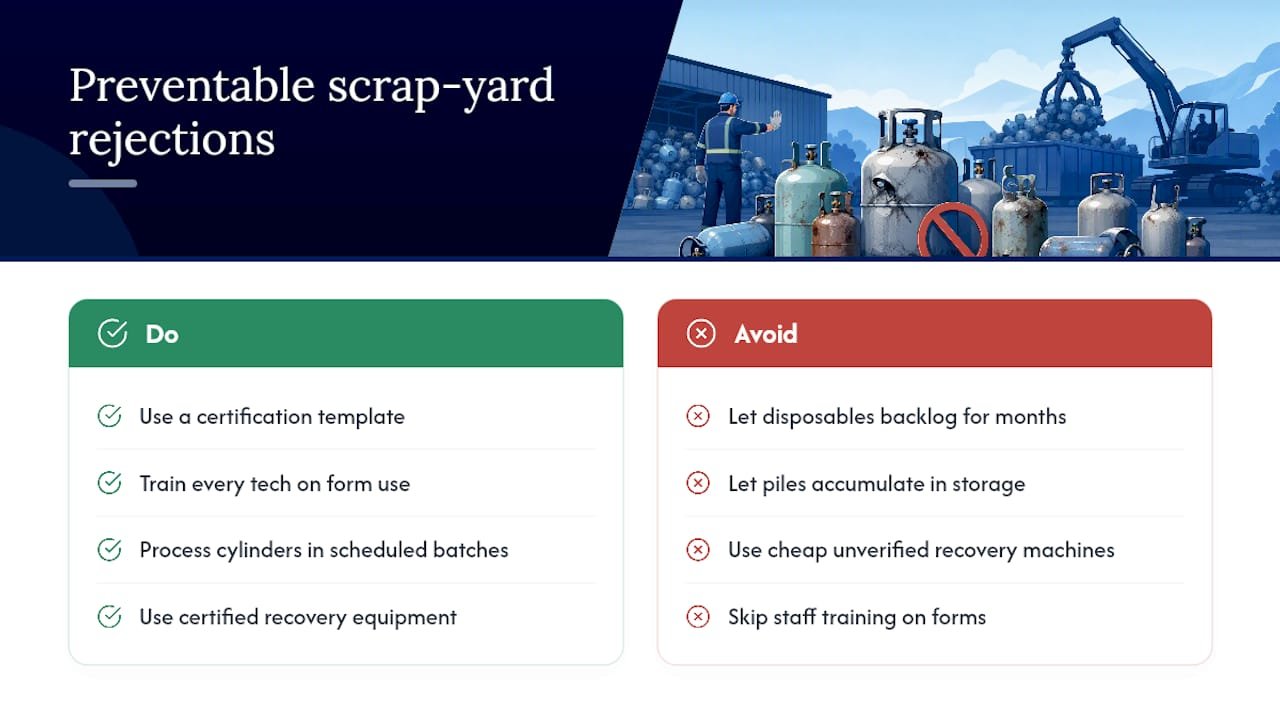
The bigger mistake is treating disposables like a low-priority backlog. Cylinders piling up in a corner for months create storage liability with zero upside. Process them in batches, on a schedule, the same way you’d rotate refrigerant stock.
None of this works without decent recovery equipment. A cheap recovery machine that can’t hold a clean vacuum reading will cost you more in rejected loads than a certified unit would have cost upfront.
— Planet
Compliant Recovery Gear and Documentation From Hvac-prime
Getting rejected at the scrap yard usually traces back to one thing: a recovery machine that can’t hit a clean vacuum, or no analyzer to confirm what’s actually in the cylinder. Hvac-prime stocks refrigerant kits built to reach and hold the vacuum level your certification statement needs to claim, plus refrigerant analyzers that confirm gas type before you write anything down.
If your shop needs SDS or TDS sheets to round out a disposal file, the refrigerant SDS and TDS download page covers most of what final processors ask for. Browse the refrigerants category for wholesale pricing on virgin product while you’re there, since most shops are ordering fresh charge in the same trip they’re offloading empties. Check current stock or reach out for documentation templates before your next scheduled pickup.
Sources
- Recovering, Recycling, and Reclaiming of Refrigerants | US EPA
- Code of Federal Regulations — 40 CFR § 84.116 (excerpt) | Cornell LII




 HVAC
HVAC Automotive
 Refrigerant Diagnostics Kit
 Water Heaters
One thought on “What Is the Legal Way to Dispose of a Refrigerant Cylinder?”