
5 Fields to Prevent Refrigerant Shortages for U.S. HVAC Contractors

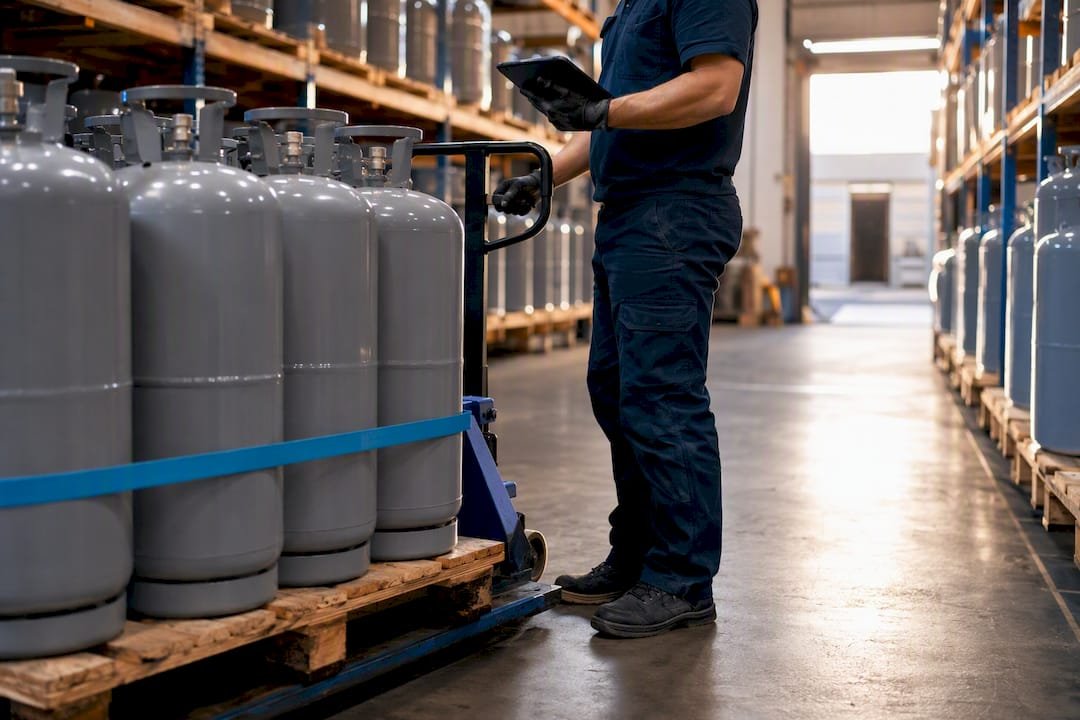
Priority one for commercial refrigerant work is a supplier with dependable stock, real documentation, and shipping that matches your job schedule. Line up availability first, then build your truck around a recovery machine and analyzer rated for today’s blends. Some suppliers carry wholesale virgin refrigerants and the kits to back them, which covers the sourcing half of that equation for U.S. contractors. The procurement checklist below covers the rest.
TL;DR:
- Availability and regional warehouse coverage are more important than cost when sourcing refrigerants, as delays can stall projects.
- Store cylinders upright, track hydro test dates, and separate A2L from A1 refrigerants to prevent dangerous mishandling and downtime.
- Testing recovered refrigerant with a portable analyzer before reuse reduces contamination risks and prevents costly wasted work.
- Reclaimed refrigerant can be cheaper but only if contamination is low; negotiate return credits and consolidate cylinders to save on freight.
- A recovery machine rated for A2L refrigerants and a refrigerant analyzer are essential tools for faster, safer service and reducing emergency delays.
Table of Contents
- What Are the Best Practices for Sourcing Wholesale Commercial Refrigerants?
- How Should You Store and Handle Commercial Refrigerant Cylinders?
- How Do Reclaimed and Virgin Refrigerant Flow Through the Supply Chain?
- Which Tools Belong on a Commercial Refrigeration Service Truck?
- What Does HVAC Prime Bring to Commercial Refrigerant Supply?
- How Do You Get Started With HVAC Prime for Commercial Orders?
- Sources
What Are the Best Practices for Sourcing Wholesale Commercial Refrigerants?
Cylinder price is the number every buyer fixates on, and it’s the wrong one to lead with. Wholesale distribution remains the dominant procurement channel for HVAC contractors, and availability and delivery performance rank among the top factors contractors weigh when picking a distributor. A cheaper cylinder that arrives three days late costs you a stalled job and an angry facility manager. A supplier with regional warehouse coverage gets product to your truck before that happens.
Landed cost, not sticker price, is the number that actually matters. Add the base price to hazmat handling fees, freight, and any rush surcharge, and the “cheap” vendor sometimes ends up the most expensive one on the invoice. Regional warehouse sourcing and consolidated shipments cut both freight expense and the lead-time variability that wrecks a schedule.
Order planning matters just as much as vendor choice. Staggered stocking, a defined minimum order quantity, and a clear emergency stock policy with your supplier keep you from either overbuying cylinders you don’t need yet or scrambling when a compressor fails on a Friday afternoon.
Before you commit to a new vendor, request:
- Safety data sheets (SDS) and technical data sheets (TDS) for every refrigerant you’ll order
- Batch IDs tied to each cylinder shipment
- Cylinder hydrostatic test records
- A written policy on rush orders and emergency shipping
- Clear terms on cylinder returns and credits
Pro Tip: Call a prospective supplier during a slow week and ask what happens during a heat-wave stock crunch. Their answer tells you more about reliability than any price sheet.
The U.S. refrigerant market runs multi-tiered, with producers, wholesalers, and thousands of local contractors competing for the same cylinders during peak season. Distributors that pair technical support with a wide product portfolio tend to hold onto contractor accounts even when a competitor undercuts them on price.
How Should You Store and Handle Commercial Refrigerant Cylinders?
Cylinder mismanagement causes more preventable downtime than most contractors admit. A few habits fix most of it:
- Store cylinders upright, grouped by refrigerant family, and rotate stock FIFO so older cylinders move out first.
- Track hydrostatic test dates and DOT markings on every cylinder in the warehouse and on the truck.
- Pull unmarked or expired cylinders from service immediately rather than “getting to it later.”
- Segregate mildly flammable A2L refrigerants like R32 and R454B from A1 blends, and confirm your recovery equipment is A2L rated before you touch either one. Equipment manufacturer guidance on this point is not optional; using a standard recovery machine on an A2L charge is how technicians end up in the news for the wrong reasons.
- Keep SDS and TDS sheets, along with emergency contact numbers, accessible in both the truck and the warehouse, not buried in a filing cabinet back at the shop.
Whether you return a full recovery cylinder to your wholesaler or reuse product on site depends on volume and purity. Small jobs rarely justify onsite reclamation equipment. Larger commercial accounts with frequent recovery work often save money by testing and reusing product directly, provided the analyzer readings check out.
Pro Tip: Photograph the DOT stamp and hydro test date on every incoming cylinder at intake. It takes ten seconds and saves an argument later about whose cylinder failed.
How Do Reclaimed and Virgin Refrigerant Flow Through the Supply Chain?
Start tracking inventory with five fields you can maintain in a spreadsheet or a basic inventory app: SKU, cylinder ID, weight, fill date, and storage location. That’s enough to catch shrinkage, expired stock, and reorder points without building an enterprise system you’ll abandon in a month.
The U.S. reclamation market runs as a loop. Technicians recover refrigerant, wholesalers collect and forward it to reclaimers, and reclaimers sell it back into the supply chain once it clears purity testing. That reclaimed product often costs less than virgin refrigerant, but only makes financial sense when contamination levels are low enough that reclamation doesn’t eat the savings in processing fees.
Wholesalers frequently supply empty recovery cylinders and manage the return leg to reclaimers, and technicians can receive credits or reduced fees depending on the relationship. That’s real money left on the table if you’re not asking your supplier about it.
Practical steps that reduce net spend:
- Test recovered product with a refrigerant analyzer before assuming it’s reusable
- Ask reclaimers about acceptance thresholds before shipping a full drum for processing
- Negotiate credit terms for returned cylinders instead of treating them as sunk cost
- Consolidate recovery cylinders across job sites before shipping to a reclaimer to cut freight per pound
Which Tools Belong on a Commercial Refrigeration Service Truck?
A refrigerant analyzer earns its cost back fast. Running a quick check on recovered or reclaimed product at the point of receipt keeps a contaminated drum from wasting a technician’s afternoon, or worse, going into a customer’s system.
Recovery machines rated for A2L refrigerants are no longer optional for anyone touching modern commercial equipment. R32 and R454B are showing up in more installations every year, and standard recovery units simply aren’t built for them.
A commercial-grade truck kit generally includes:
- A2L-rated recovery machine
- Digital refrigerant scale accurate to commercial charge sizes
- Manifold gauge set rated for the pressures of newer blends
- Electronic leak detector
- Charging hoses and adapters sized for larger commercial systems
- A refrigerant analyzer for verifying recovered or reclaimed product
The payoff shows up in fewer emergency orders and faster job turnarounds. Suppliers that offer emergency stock policies and regional warehouse access tend to keep contractor loyalty even at a slightly higher per-cylinder price, because the alternative, a stalled job waiting on a rush shipment, costs far more than the price difference.
What Does HVAC Prime Bring to Commercial Refrigerant Supply?
Contractors don’t need another vendor pitching the lowest sticker price. They need a supplier that treats the relationship like a procurement partnership: consistent stock, real batch traceability, and documentation that doesn’t require three phone calls to track down.
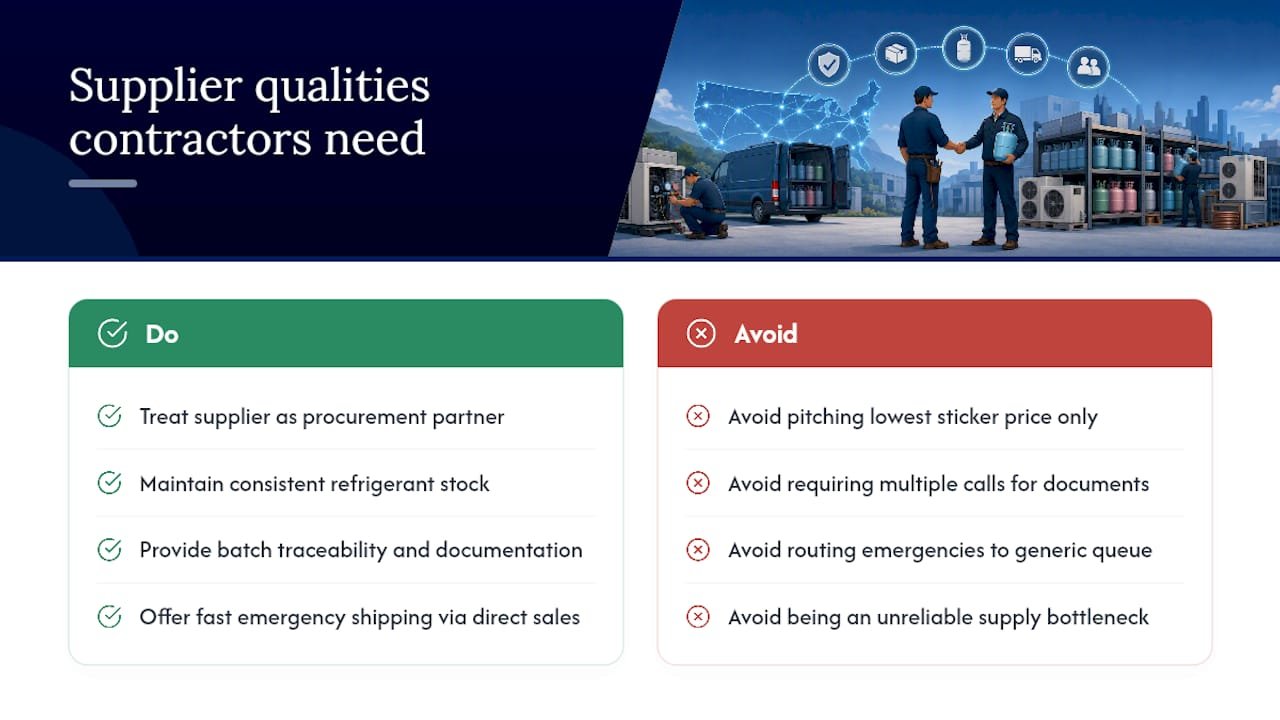
Some suppliers stock a wide range of virgin refrigerants, from R410A and R22 to newer blends like R454B and R1234yf, and offer fast shipping when a compressor fails mid-week. SDS and TDS downloads are available for every product line, which matters more than most vendors admit when a facility manager asks for documentation on short notice. Bulk orders and emergency shipments get handled through direct sales contact rather than a generic support queue, which is the difference contractors actually notice when a job can’t wait.
None of that replaces a technician’s own judgment about equipment ratings, cylinder condition, or job-specific code requirements. It does mean the supply side of the job stops being the bottleneck.
— Planet
How Do You Get Started With HVAC Prime for Commercial Orders?
Sourcing refrigerant for a commercial job shouldn’t require three phone calls and a wait-and-see attitude toward shipping dates. HVAC Prime sells wholesale virgin refrigerants direct to contractors, with the refrigerant category page organized by type so you can find R410A, R32, R448A, or whatever your job calls for without digging.
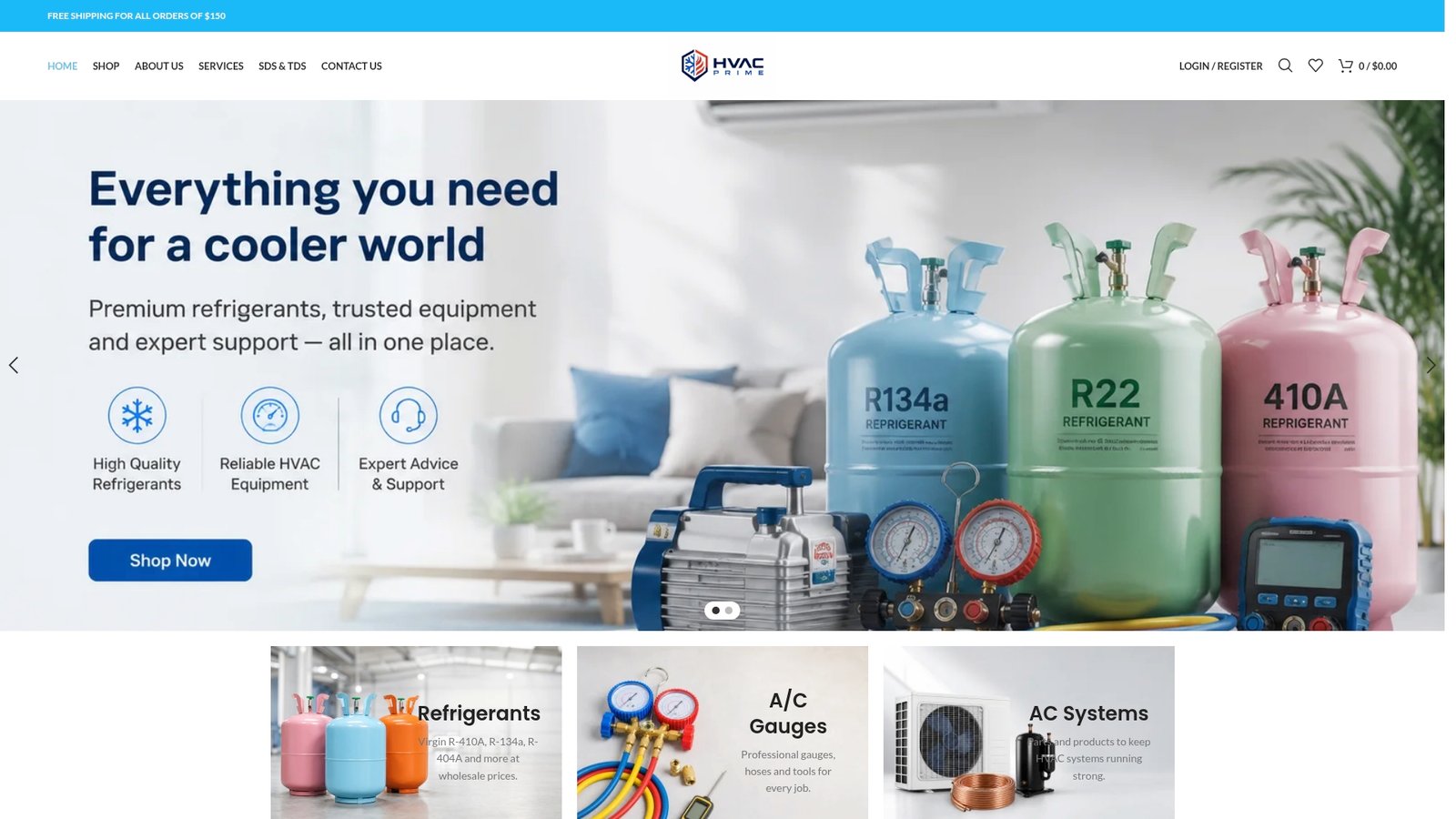
Before placing a first order, have your business name, shipping preference, and (for larger quantity purchases) your EPA Section 608 certification ready. It speeds up processing and avoids the back-and-forth that delays a shipment by a day you don’t have. If you’re outfitting a truck at the same time, the SDS and TDS download library covers the documentation most facility managers ask for on commercial jobs, and the HVAC tools lineup covers gauges, analyzers, and recovery equipment sized for commercial charges.
Supplier reliability is as much a business decision as a technical one, and contractors evaluating where their next lead or account comes from know that a stalled job over a missing cylinder costs more than the account is worth. If you’ve got a large order, an unusual blend, or a same-week deadline, contact a supplier’s sales team directly for a stock check and emergency shipping options before you commit to a delivery date with your customer.
Sources
- Wholesale Distribution Dominates HVAC Contractor Sales – Modern Distribution Management
- Analysis of the U.S. hydrofluorocarbon reclamation market, stakeholders, drivers and practices – U.S. EPA
- Refrigerant gases market in the United States – IndexBox




 HVAC
HVAC Automotive
 Refrigerant Diagnostics Kit
 Water Heaters