
EPA Refrigerant Regulations: 2026 Compliance Guide

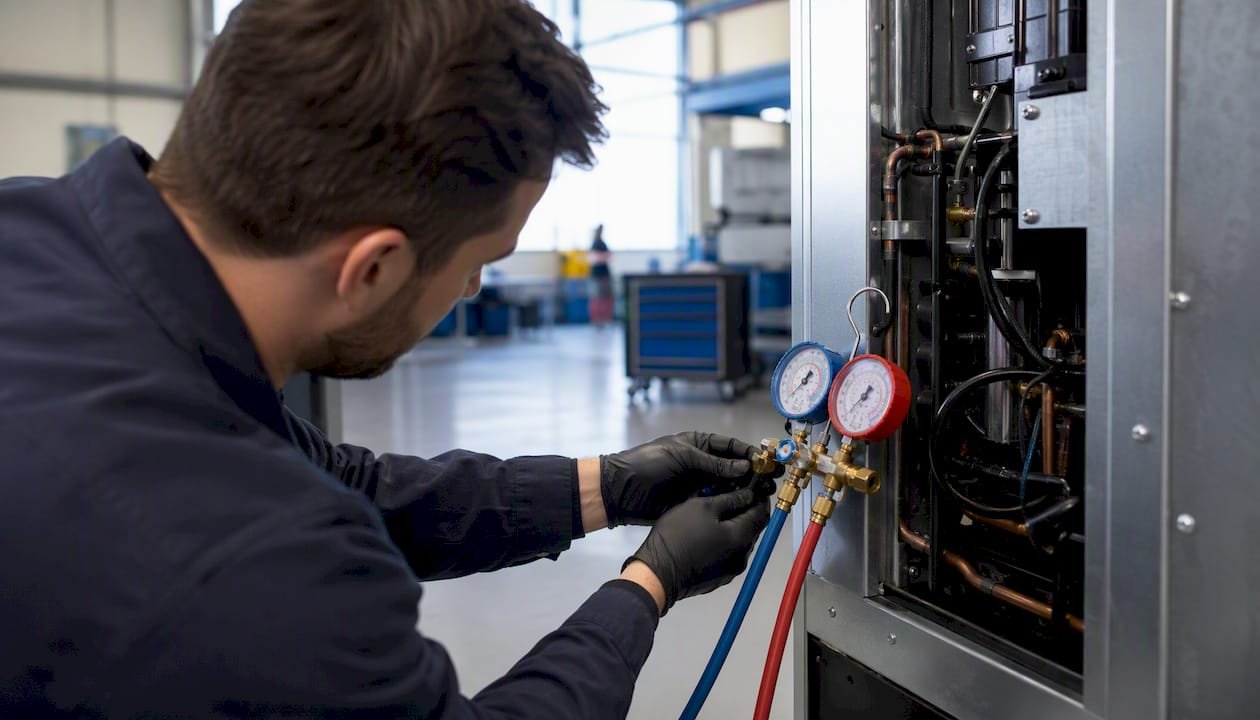
U.S. EPA refrigerant regulations now operate under four interlocking pillars: the AIM Act phasedown and HFC Allowance Allocation Program, the Technology Transitions Rule, the Emissions Reduction & Reclamation (ER&R) Program, and Section 608 of the Clean Air Act. If you service, install, or procure refrigerants commercially, all four apply to you right now.
Three actions belong at the top of your list this week:
- Run a full equipment and refrigerant inventory. Capture refrigerant type, GWP, charge size, manufacture date, label status, and service history for every system you own or service.
- Verify your supplier’s allowance-backed supply. Confirm that any virgin HFC you purchase is covered by valid calendar-year production or consumption allowances, and lock in a reclaimer relationship for systems that now require reclaimed refrigerant.
- Confirm Section 608 certification coverage and ALD readiness. Every technician working refrigerant must hold current certification, and owners of qualifying systems face automatic leak detection (ALD) installation deadlines phased through 2026–2027.
The next high-impact deadlines: Early 2026 triggered leak repair thresholds and the reclamation standard under the ER&R rule, and annual Technology Transitions reporting for the previous calendar year’s data was due by late March 2026. Check the May 2026 Federal Register reconsideration notice before replacing any RACHP system — some compliance dates shifted.
Key Takeaways
HVAC professionals face right now.
| Point | Details |
|---|---|
| HFC supply is structurally constrained | The cap through the late 2020s means virgin HFC availability is limited; verify allowance-backed supply from every vendor. |
| ER&R compliance dates are active | January 1, 2026 triggered leak repair thresholds and the ≤15% virgin HFC reclamation standard for most subsectors. |
| Technology Transitions reporting is due annually | 2025 data was due March 31, 2026; labeling requirements apply from each subsector’s manufacture/import compliance date. |
| Check the May 2026 reconsideration notice | Some RACHP compliance dates extended to 2030–2032; confirm your subsector before replacing equipment. |
| Hvac-prime supplies compliant inventory with documentation | Wholesale refrigerants, SDS/TDS downloads, and diagnostic tools available at hvac-prime.com to support EPA recordkeeping. |
Table of Contents
- How EPA refrigerant regulations are structured under the AIM Act and Section 608
- What the HFC phasedown schedule and allowance program mean for your procurement
- What the Technology Transitions rule restricts and when it takes effect
- What the ER&R program requires for leak repair, ALD, and reclamation
- What Section 608 requires from technicians, reclaimers, and facility operators
- Practical compliance checklist for contractors and facility managers
- Enforcement risks and common compliance mistakes to avoid
- Where to find authoritative EPA documents and how to stay current
- Approved alternative refrigerants and their environmental trade-offs
- Proper refrigerant handling and recovery procedures beyond leak repair
- EPA-mandated updates to technician training and certification programs
- Best practices for transitioning existing equipment to compliant refrigerants
- State-level regulations that go beyond federal EPA rules
- The regulatory pressure is real, but the window to act strategically is closing
- Hvac-prime stocks compliant refrigerants and the tools to back your documentation
- Sources
How EPA refrigerant regulations are structured under the AIM Act and Section 608
The American Innovation and Manufacturing (AIM) Act of 2020 is the governing statute. It gave EPA three distinct authorities: (1) phase down HFC production and consumption through an allowance program, (2) restrict HFC use by sector through Technology Transitions rules, and (3) manage HFC releases and maximize reclamation through the ER&R program. EPA’s background on the AIM Act lays out how these three prongs interact.
Section 608 of the Clean Air Act predates the AIM Act and operates in parallel. It governs the service side: venting prohibitions, technician certification, recovery equipment, and reclaimer registration. Regulations under Section 608 sit at 40 CFR Part 82, Subpart F. AIM Act rules live primarily at 40 CFR Part 84.
The practical sequence: Congress passed the AIM Act in December 2020. EPA finalized the HFC Allowance Allocation rules in 2021, the Technology Transitions final rule in October 2023, and the ER&R final rule in October 2024. Implementation steps for both rules run through 2025–2028, with a May 2026 reconsideration notice amending certain Technology Transitions dates and GWP limits. Section 608 obligations run continuously underneath all of this.
What the HFC phasedown schedule and allowance program mean for your procurement
The AIM Act phases down HFC production and consumption to 15% of historic baseline by 2036, with stepwise reductions beginning at 10% in 2022. Each step tightens the total volume of HFCs that producers and importers can legally place into commerce.
EPA issues calendar-year production and consumption allowances that producers and importers must expend to legally produce or import bulk HFCs. Allowances are issued by October 1 for the following calendar year and are valid only for that year. Four allowance categories exist: production allowances, consumption allowances, application-specific allowances, and production-for-export allowances. Each operates under distinct rules, and allowances can be transferred between entities under EPA oversight.
What this means for contractors and distributors:
- Supply is structurally constrained. The 40% cap in effect through 2028 means total HFC volume in the U.S. market is roughly 60% below pre-AIM Act levels. Expect continued price pressure on high-demand refrigerants like R-410A.
- Verify your supplier’s allowance status. A supplier who cannot demonstrate allowance-backed supply is selling non-compliant product. Ask for documentation.
- Allowance revocations affect market availability. EPA has used administrative consequences, including revocations and withholdings, to penalize non-compliant producers. Those revoked allowances can be redistributed, but the short-term market effect is real.
- Reclaimed refrigerant is increasingly the practical answer. As virgin HFC supply tightens, reclaimed product from certified reclaimers fills the gap for legacy systems.
What the Technology Transitions rule restricts and when it takes effect
The Technology Transitions rule, finalized in October 2023, restricts the manufacture, import, sale, export, and installation of specific high-GWP HFCs across aerosol, foam, and refrigeration/air-conditioning/heat pump (RACHP) subsectors. The Technology Transitions fact sheet covers subsector-specific GWP thresholds and compliance dates in detail.
Key compliance dates for RACHP subsectors (original rule, before May 2026 amendments):
| Subsector | Manufacture/Import Date | Sale/Distribution Date |
|---|---|---|
| Retail food refrigeration (supermarkets) | January 1, 2025 | January 1, 2026 |
| Remote condensing units | January 1, 2025 | January 1, 2026 |
| Standalone commercial refrigeration | January 1, 2027 | January 1, 2028 |
| Comfort cooling (chillers, large) | January 1, 2025 | January 1, 2026 |
| Cold storage warehouses | January 1, 2026 | January 1, 2027 |
| Refrigerated transport | January 1, 2025 | January 1, 2026 |
The May 26, 2026 Federal Register reconsideration notice amended several of these dates and GWP limits. Some industrial process refrigeration (IPR) and chiller compliance dates extended to 2030, and certain retail and remote-condensing GWP limits received temporary relaxations through 2032. Before you replace or retrofit any system, pull the specific subsector entry from that notice.
Labeling and reporting: Products and components subject to the rule must carry required labels once the manufacture/import compliance date passes. Annual reporting for 2025 data was due March 31, 2026. Reporting obligations begin with the subsector’s manufacture/import compliance date and continue annually.
What the ER&R program requires for leak repair, ALD, and reclamation
The ER&R final rule, issued October 11, 2024 under AIM Act subsection (h), sets enforceable requirements to reduce HFC releases and maximize reclamation. The ER&R fact sheet is the fastest way to confirm subsector-specific thresholds.
Leak repair thresholds (annualized leak rate triggers requiring repair):
Early 2026 was the compliance date for most leak repair thresholds and the reclamation standard. ALD installation requirements phase in through 2026–2027 depending on whether the appliance is new or existing and its charge size.
Automatic leak detection (ALD): New appliances above the charge-size threshold must include ALD systems at installation. Existing appliances have a phased retrofit timeline running into 2027. The charge-size trigger varies by subsector — confirm the specific threshold for your equipment class in the ER&R fact sheet.
This standard applies to product sold as “reclaimed” and directly affects which suppliers can legally supply reclaimed refrigerant. Reclaimers and distributors face reporting deadlines beginning with 2025 data.
Key practical points:
- Compliance risk under ER&R falls primarily on appliance owners and large operators, not just technicians.
- Recordkeeping must document leak inspections, repair dates, refrigerant quantities added, and ALD system status.
- Reclaimers must register with EPA and submit annual reports.
What Section 608 requires from technicians, reclaimers, and facility operators
Section 608 of the Clean Air Act prohibits the intentional venting of ozone-depleting substances and their substitutes, including HFCs, during the maintenance, service, repair, or disposal of stationary refrigeration and air-conditioning equipment. This is not a new rule, but enforcement remains active and the ER&R program adds a new layer of recordkeeping that intersects with Section 608 obligations.
Technician certification: Any technician who purchases refrigerant in containers larger than two pounds must hold EPA Section 608 certification. Certification does not expire by statute, but technicians must stay current with new refrigerant classes — particularly A2L flammables like R-32 and R-454B — and updated ER&R reclamation practices. A technician certified under the old refrigerant classes who has not reviewed A2L handling protocols carries real compliance and safety risk.
Reclaimer responsibilities: Reclaimers must register with EPA, meet purity standards (AHRI 700), and submit annual reports on quantities received and reclaimed.
Cylinder and disposal rules: Disposable cylinders must have contents fully recovered before disposal. Recovered refrigerant goes to a certified reclaimer or processor. Reusable cylinders must meet DOT specifications. Technicians cannot vent residual refrigerant to clear a cylinder for disposal.
Recordkeeping: Service records must capture refrigerant type, quantity added or recovered, equipment location, and technician certification number. These records are the first thing an EPA inspector requests. Keep them for at least three years.
Practical compliance checklist for contractors and facility managers
Run a prioritized three-step program: inventory first, then supplier verification, then staff and process updates. Here is the sequence in detail.
-
Complete a full equipment inventory. For every system you own or service, record: equipment type and subsector classification, refrigerant type and GWP, charge size, manufacture or import date, label status (does it carry the required Technology Transitions label?), and service history including refrigerant additions.
-
Classify each system by compliance status. Flag systems that use refrigerants now restricted under the Technology Transitions rule. Identify which systems exceed the ER&R leak rate threshold and need immediate repair scheduling. Note which systems require ALD installation.
-
Verify supplier allowance documentation. Request written confirmation that your virgin HFC supplier holds valid calendar-year consumption allowances. For reclaimed refrigerant, confirm the reclaimer is EPA-registered and that product meets the ≤15% virgin HFC standard.
-
Establish a reclaimer relationship now. Do not wait until a system fails. Identify one or two EPA-registered reclaimers, confirm their capacity and turnaround, and get their paperwork templates in hand before you need them.
-
Audit technician certifications. Confirm every technician holds Section 608 certification for the refrigerant types they handle. Schedule A2L safety and handling training for anyone working with R-32, R-454B, or R-1234yf.
-
Update service SOPs and reporting calendars. Build the March 31 annual Technology Transitions reporting deadline and any ER&R reporting windows into your operations calendar. Assign a responsible person for each filing.
-
Label all compliant components. Confirm that any equipment you manufacture, import, or sell after the applicable compliance date carries the required Technology Transitions label. Missing labels are a common enforcement trigger.
-
Prepare an audit trail. Maintain service records, supplier attestations, allowance documentation, and ALD installation records in a single accessible location. Three years minimum retention.
Pro Tip: Prioritize your inventory triage by charge size and subsector. Systems with smaller charges and lower GWP refrigerants can follow. A refrigerant diagnostics kit speeds up charge verification and leak rate calculations on-site.
Enforcement risks and common compliance mistakes to avoid
EPA enforces through administrative penalties, allowance revocations, civil fines, and recordkeeping audits. The most common triggers: failure to file annual reports on time, intentional venting, missed leak repairs past the threshold date, and purchasing virgin HFC from a supplier without valid allowances.
The single most underestimated enforcement risk is documentation failure, not the violation itself. EPA inspectors routinely find that operators performed the required repair or recovery but cannot produce the service record to prove it. A repair with no paper trail is treated the same as no repair at all. Build your recordkeeping system before you need it, not after an inspector arrives.
Allowance revocations are a real market consequence. When EPA revokes or withholds allowances from a non-compliant producer or importer, those allowances may be redistributed — but the short-term supply disruption hits downstream buyers first. Contractors who relied on a single supplier with compliance problems have found themselves unable to source product mid-season.
Common field mistakes and how to avoid them:
- Missing or incorrect labels on equipment. Mitigation: build a label audit into every installation sign-off.
- Using unverified virgin HFC supply. Mitigation: require written allowance attestation from every supplier before purchase.
- Failing to use reclaimed refrigerant where required. Mitigation: confirm ER&R applicability for each system before ordering virgin product.
- Incomplete service records. Mitigation: use a standardized service form that captures all required fields and store digitally with backup.
- Missed reporting deadlines. Mitigation: set calendar reminders 60 days before each annual filing window.
Where to find authoritative EPA documents and how to stay current
The highest-value pages to bookmark right now:
- AIM Act HFC phasedown FAQ: Phasedown schedule, allowance mechanics, and program overview.
- HFC Allowances page: Annual allowance notices, allocation tables, and transfer rules. Check here every October for the following year’s allowances.
- Technology Transitions fact sheet: Subsector restrictions, GWP thresholds, compliance dates, and labeling/reporting requirements.
- ER&R fact sheet: Leak rate thresholds by subsector, ALD requirements, reclamation standard, and reporting timelines.
- Section 608 resources page: Technician certification, venting prohibition, recovery requirements, and reclaimer registration.
- Section 608 regulatory updates hub: Webinars, enforcement summaries, and guidance on reclaiming and disposal.
- May 2026 Federal Register reconsideration notice: Amended GWP limits and extended compliance dates for specific RACHP subsectors. Read this before replacing any system.
To subscribe to EPA rule updates, visit the Federal Register at federalregister.gov and set up email alerts for “AIM Act” and “HFCs.” EPA also posts webinar announcements on the Section 608 and AIM Act pages — these are worth attending because the Q&A sessions often clarify ambiguous compliance scenarios faster than reading the rule text.
Approved alternative refrigerants and their environmental trade-offs
EPA’s SNAP (Significant New Alternatives Policy) program evaluates and lists acceptable substitutes for high-GWP refrigerants. The current generation of approved alternatives falls into three broad categories.
HFOs and HFO blends such as R-1234yf and R-1234ze have global warming potentials below 10, compared to R-134a’s GWP of 1,430. R-1234yf is now the standard in new light-duty vehicle air conditioning and is gaining ground in stationary applications. The trade-off: HFOs are mildly flammable (A2L classification), which requires updated handling protocols and, in some jurisdictions, modified installation practices.
Low-GWP HFC blends like R-454B (GWP approximately 466) and R-32 (GWP 675) are approved for specific RACHP subsectors and represent a middle path for contractors transitioning from R-410A (GWP 2,088). R-454B is the primary replacement refrigerant for new residential and light commercial equipment in the U.S. market. R-32 sees wider use in split systems globally and is growing in U.S. applications.
Natural refrigerants including CO2 (R-744), ammonia (R-717), and propane (R-290) carry near-zero or zero GWP. CO2 transcritical systems are now common in supermarket refrigeration. Ammonia remains the standard for large industrial refrigeration. Propane is approved for small hermetic systems. Each carries specific safety and design requirements that differ substantially from HFC systems.
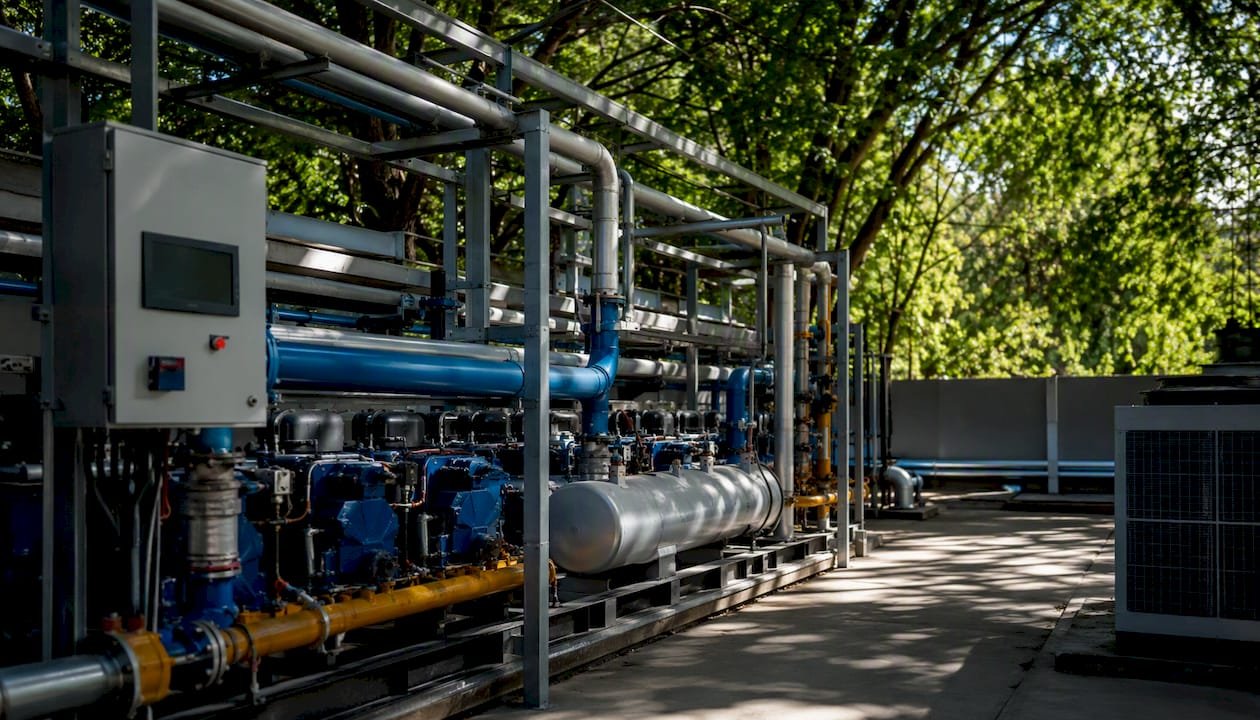
The SNAP program lists are updated periodically. Before specifying a refrigerant for a new installation, confirm its SNAP status for the specific end-use and check whether the Technology Transitions rule has set a GWP ceiling for that subsector.
Proper refrigerant handling and recovery procedures beyond leak repair
Leak repair is one piece of a broader handling discipline. The full picture matters for compliance and for protecting your technicians.
Recovery before service: Federal law requires recovering refrigerant to the required vacuum level before opening any system for service, regardless of the refrigerant type. Recovery equipment must be certified to EPA standards and appropriate for the refrigerant class. A2L refrigerants require recovery equipment rated for mildly flammable gases.
Cylinder management: Never mix refrigerants in a recovery cylinder. Label every cylinder with the refrigerant type, date of recovery, and technician name. Cylinders must meet DOT specifications for the refrigerant being stored. Overfilling is a safety and legal violation.
Transfer to reclaimers: Recovered refrigerant must go to an EPA-registered reclaimer unless it is returned to the same system or the same owner’s system. Keep the reclaimer’s receipt as part of your service record. This receipt is documentation that the refrigerant was not vented.
Handling A2L refrigerants: R-454B, R-32, and R-1234yf are all A2L (mildly flammable). They require leak-detection equipment in enclosed spaces, ignition-source management, and technician training specific to flammable refrigerant handling. ASHRAE 15 and local mechanical codes set the installation requirements; confirm your jurisdiction’s adopted code version before starting work.
Refrigerant identification: Before recovering or adding refrigerant, verify the system’s refrigerant type with a refrigerant analyzer. Contaminated or mislabeled refrigerant in a recovery cylinder creates a disposal problem and a potential safety hazard.
EPA-mandated updates to technician training and certification programs
Section 608 certification itself does not expire by statute. A technician certified in 1995 is still legally certified. The practical problem is that the refrigerant landscape has changed substantially, and a certification that predates A2L refrigerants, the ER&R reclamation standard, and the Technology Transitions labeling requirements leaves real knowledge gaps.
EPA has not yet mandated a universal recertification program, but the agency has issued guidance and webinar materials through the Section 608 regulatory updates hub that effectively define what current competency looks like. Technicians handling R-454B, R-32, or R-1234yf without A2L-specific training are operating outside the spirit of the certification program and, in some cases, outside ASHRAE 15 and local code requirements.
The practical training priorities right now:
- A2L refrigerant safety: flammability characteristics, leak detection in enclosed spaces, ignition-source management, and recovery equipment compatibility.
- ER&R reclamation procedures: how to document refrigerant quantities, select an EPA-registered reclaimer, and meet the ≤15% virgin HFC standard in reclaimed product.
- Technology Transitions labeling: what labels are required, where they go, and how to verify a component’s compliance status before installation.
- Reporting mechanics: how to complete annual Technology Transitions reports and ER&R recordkeeping forms.
ESCO Group, HVAC Excellence, and North American Technician Excellence (NATE) all offer updated training modules covering A2L handling and current regulatory requirements. Manufacturer training programs from equipment OEMs are also a practical source for refrigerant-specific handling guidance.
Best practices for transitioning existing equipment to compliant refrigerants
Retrofitting existing equipment is rarely as simple as swapping refrigerants. The right approach depends on system age, design pressure ratings, lubricant compatibility, and the economics of retrofit versus replacement.
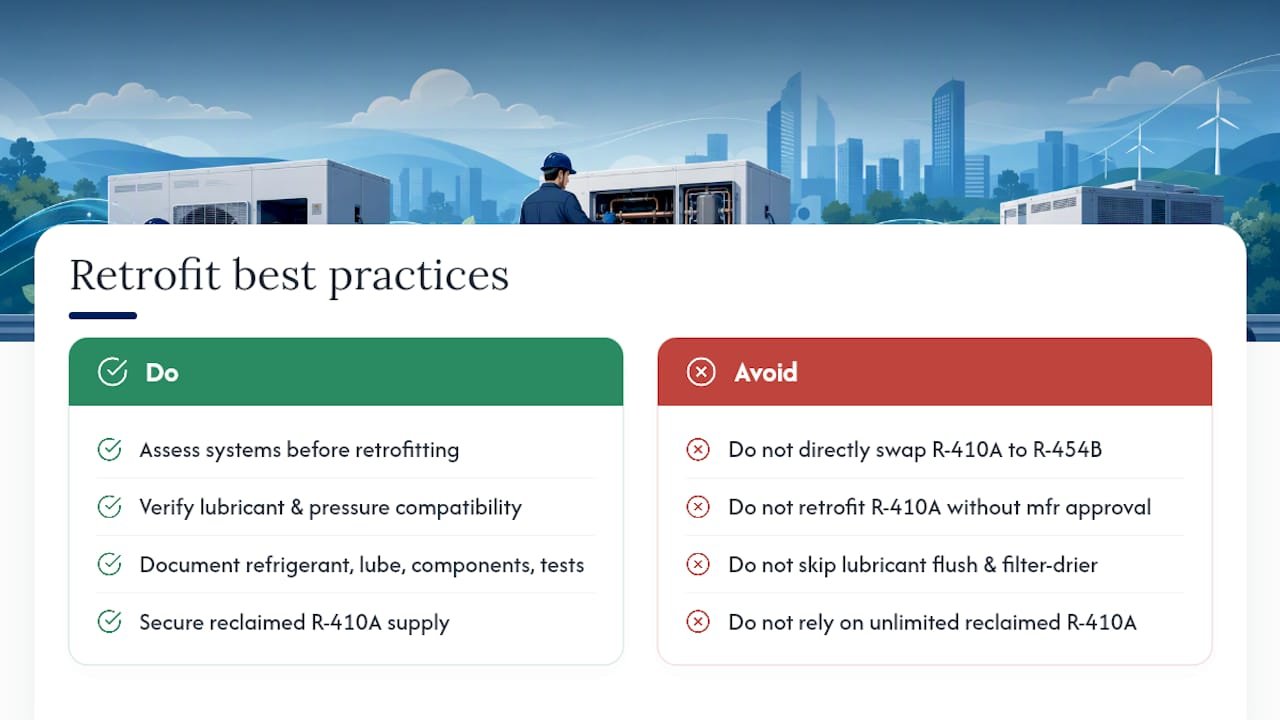
Assess before you act. Not every system that uses a restricted refrigerant needs immediate replacement. The Technology Transitions rule restricts manufacture, import, sale, and installation of new equipment using high-GWP HFCs — it does not prohibit continued operation of existing systems. Servicing existing R-410A equipment with reclaimed R-410A remains permissible as long as supply is available and allowance-backed.
Evaluate retrofit feasibility by refrigerant class. R-410A systems generally cannot be directly retrofitted to R-454B because of pressure and lubricant differences. A drop-in replacement does not exist for most R-410A equipment. Retrofit to R-32 is possible in some equipment designs but requires manufacturer approval and lubricant verification. For most residential and light commercial systems, the practical path is continued service with reclaimed R-410A until end-of-life, then replacement with R-454B equipment.
For commercial refrigeration, the retrofit calculus is different. Many R-404A and R-507A systems can transition to R-448A or R-449A, which are approved drop-in alternatives with substantially lower GWP. These transitions require lubricant flush, filter-drier replacement, and system performance verification, but they avoid full equipment replacement.
Document every retrofit. Record the original refrigerant, the replacement refrigerant, lubricant type and quantity, any component replacements, and the post-retrofit performance verification. This documentation supports warranty claims and demonstrates compliance if the system is later inspected.
Plan procurement in advance. Reclaimed R-410A supply is finite and will tighten as the installed base ages. If you manage a large portfolio of R-410A systems, establish a reclaimed supply relationship now rather than competing for limited product during peak season. Hvac-prime stocks a range of compliant HFC refrigerants and can help you plan procurement around your service schedule.
State-level regulations that go beyond federal EPA rules
Federal EPA rules set the floor. Several states have adopted regulations that are stricter, and if you operate in those states, both sets of rules apply simultaneously.
California leads the field. The California Air Resources Board (CARB) has adopted its own HFC phasedown regulations under the California Cooling Act and the Short-Lived Climate Pollutant (SLCP) Reduction Strategy. CARB’s GWP limits for certain stationary refrigeration applications are more aggressive than EPA’s Technology Transitions thresholds, and California’s refrigerant management program (RMP) imposes leak inspection and repair requirements that predate and, in some cases, exceed the federal ER&R rule. If you operate commercial refrigeration in California, you are subject to both CARB RMP and federal ER&R requirements.
Washington State adopted HFC restrictions aligned with California’s approach under its own Climate Commitment Act framework. Washington’s Department of Ecology enforces GWP limits for specific product categories that mirror or exceed federal thresholds.
New York, Colorado, and Maryland have adopted or are advancing HFC regulations through their own environmental agencies, often tracking California’s CARB rules with a lag of one to two years.
The practical implication: if you operate across multiple states, your compliance program needs a state-by-state layer on top of the federal baseline. CARB’s refrigerant management program is the most detailed and most enforced state-level program in the country. Review it even if you are not currently operating in California, because it often previews where federal rules are heading.
For multi-state operators, the safest approach is to build to the most stringent applicable standard across your portfolio. That usually means California’s thresholds and inspection frequencies, which satisfy federal requirements everywhere else.
The regulatory pressure is real, but the window to act strategically is closing
The contractors who are navigating this well are not the ones who read every Federal Register notice. They are the ones who ran their inventory early, locked in reclaimed supply relationships before the market tightened, and trained their technicians on A2L handling before a job required it.
The 2026 reconsideration rule gave some subsectors more time, and that is genuinely useful breathing room. But it is easy to misread that extension as a signal that the overall phasedown is softening. It is not. The supply math does not improve.
The ER&R program is where most operators underestimate their exposure. Leak repair thresholds and the reclamation standard are now enforceable, and the compliance risk sits with the appliance owner, not the technician. Facility managers who have delegated refrigerant compliance entirely to their service contractors without verifying documentation are carrying more risk than they realize.
One operational tip that applies regardless of portfolio size: build your refrigerant inventory system around manufacture dates and charge sizes, not just refrigerant type. Those two fields determine which ER&R thresholds apply, which ALD deadlines are relevant, and whether a system can be serviced with virgin or must use reclaimed refrigerant. Everything else in your compliance program flows from that data.
Hvac-prime stocks compliant refrigerants and the tools to back your documentation
Sourcing allowance-backed refrigerant quickly, with the paperwork to support EPA reporting, is where many contractors lose time they do not have. Hvac-prime carries a full range of compliant refrigerants including R-454B, R-32, R-410A, R-407C, R-448A, R-449A, and R-1234yf, all available for wholesale purchase with fast shipping to your location.
Beyond refrigerant supply, Hvac-prime provides SDS and TDS documentation for every product in the catalog, so your recordkeeping file is complete from the moment the cylinder arrives. The catalog also includes refrigerant analyzers and diagnostic kits for on-site charge verification and leak rate calculations. Request supplier documentation at checkout to support your EPA reporting requirements, and place your order at Hvac-prime to lock in inventory before the next compliance deadline.
Sources
The documents below are the authoritative starting points for each compliance area:
- Frequent Questions on the Phasedown of Hydrofluorocarbons | US EPA
- HFC Allowances | US EPA
- FACT SHEET Final Rule – Phasedown of Hydrofluorocarbons: Management of Certain Hydrofluorocarbons and Substitutes under Subsection (h) of the American Innovation and Manufacturing Act
- FACT SHEET Final Rule – Phasedown of Hydrofluorocarbons: Restrictions on the Use of Certain Hydrofluorocarbons under Subsection (i) of the American Innovation and Manufacturing Act of 2020
- Managing Refrigerant in Stationary Refrigeration and Air-Conditioning Equipment | US EPA
- Phasedown of Hydrofluorocarbons (HFCs) : Reconsideration of Certain Regulatory Requirements Promulgated under the AIM Act — Federal Register
This article is general information, not a substitute for advice from a qualified lawyer. Consult a qualified legal professional about your own circumstances before acting on anything here.




 HVAC
HVAC Automotive
 Refrigerant Diagnostics Kit
 Water Heaters
5 thoughts on “EPA Refrigerant Regulations: 2026 Compliance Guide”