
Fix Office Indoor Air Quality Fast: A Facility Manager’s Guide

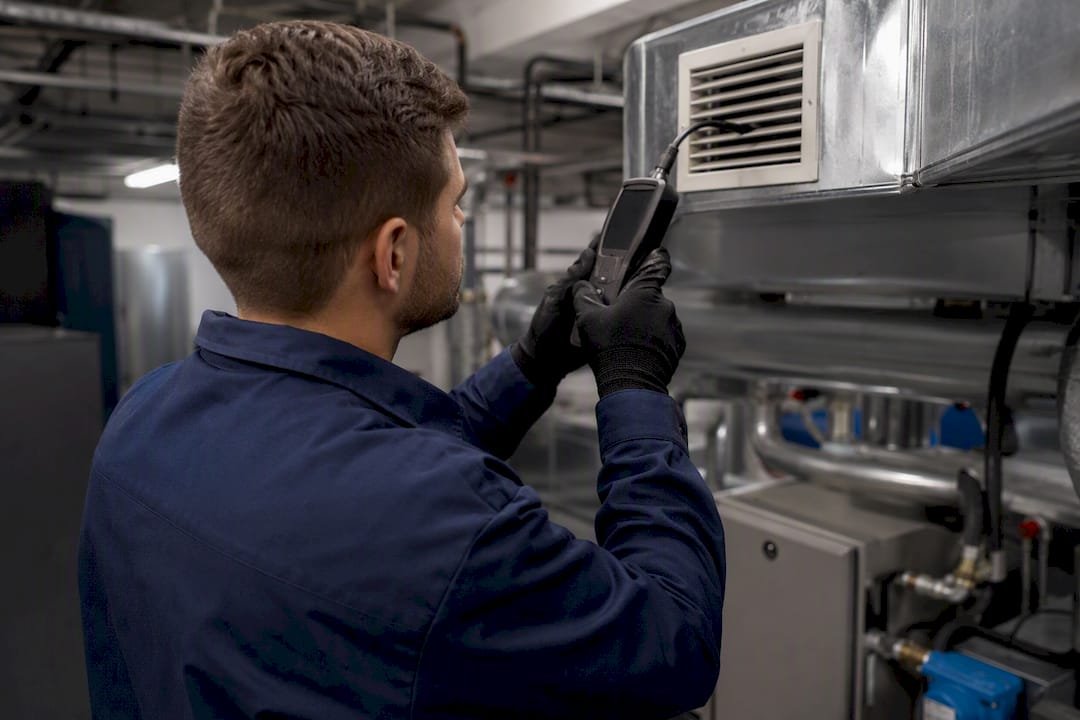
Check CO2 levels, inspect your filters, and get more outdoor air moving before you do anything else. Those three moves catch most office indoor air quality problems in under an hour, and they align directly with how the EPA frames IAQ as a shared responsibility between facility teams and occupants. OSHA doesn’t set a single numeric IAQ standard for offices, but it enforces “recognized hazards” under the General Duty Clause, which means a CO2 reading above 1,000 ppm or a moldy ceiling tile is already your problem to solve, not a gray area.
Run these checks today:
- CO2 spot-check in the most crowded room at 2 PM (a portable NDIR meter costs less than a nice office chair).
- Visible mold or odor scan around windows, ceiling tiles, and HVAC returns.
- Filter inspection: pull one and hold it up to the light. If you can’t see through it, it’s past due.
- Openable window test: know which rooms have zero outdoor air backup if the HVAC fails.
- Occupant complaint log check: three or more headache/fatigue reports from the same zone in a week is a signal, not a coincidence.
Key Takeaways
Fixing office indoor air quality starts with measuring CO2, humidity, and particulates, then addressing source control and ventilation before adding filtration or supplemental air cleaning.
| Point | Details |
|---|---|
| Measure before you fix | Check CO2, PM2.5, humidity, and temperature in the breathing zone during peak occupancy hours. |
| Target under 1,000 ppm CO2 | Keep humidity between 30% and 50% and use MERV 8 to 11 filters unless your fan supports MERV 13. |
| Fix sources first | Relocate printers and copiers before spending on filtration or portable air cleaners. |
| Maintain HVAC on schedule | Change filters quarterly, inspect condensate pans monthly, and log differential pressure over time. |
| Stock parts before you need them | Hvac-prime supplies 25LBS R407C refrigerant and HVAC repair services to keep fixes moving without delay. |
Table of Contents
- Quick Action Checklist for Office IAQ Triage
- What Is Office Indoor Air Quality and Why Does It Matter?
- What Pollutants Commonly Show Up in Offices?
- How Do You Measure and Monitor Office Air Quality?
- What CO2, Humidity, and Filtration Targets Should Offices Hit?
- How Should You Prioritize IAQ Fixes and Upgrades?
- What HVAC Maintenance Keeps Office Air Healthy?
- Who Is Responsible for Office Air Quality?
- When Should You Call an HVAC or IAQ Professional?
- How Do You Respond to a Chemical Spill or Mold Outbreak?
- Do Indoor Plants and Biophilic Design Actually Improve Air Quality?
- How Should IAQ Management Change by Season?
- Can Smart Monitoring and Building Automation Improve IAQ?
- What I’ve Learned Running IAQ Programs on Real Buildings
- Keep Your Office HVAC System Running Clean With Hvac-prime
- Frequently Asked Questions
- Sources
Quick Action Checklist for Office IAQ Triage
You don’t need a full audit to start fixing things. Here’s a time-boxed sequence anyone in the building can help run.
- 0 to 15 minutes (any occupant): Walk the floor with a handheld CO2 meter and phone flashlight. Note any stuffy rooms, musty smells, or condensation on windows.
- 15 to 60 minutes (facility staff): Pull air filters and check them against light. Inspect the mechanical room for a stagnant condensate pan, since standing water there is a classic mold trigger the EPA specifically flags in office buildings.
- 1 to 3 hours (facility staff with basic tools): Check outdoor air damper position, confirm exhaust fans in bathrooms and break rooms actually run, and verify thermostat setpoints aren’t fighting the ventilation schedule.
- 1 to 7 days (facility manager, possibly a contractor): Log CO2 and particulate readings at different times of day and different occupancy levels to spot patterns.
If any reading crosses a red-line threshold, open windows immediately, bump the outdoor air fraction on the air handler, and roll in a portable HEPA unit for that zone while you plan a permanent fix.
What Is Office Indoor Air Quality and Why Does It Matter?
Office indoor air quality is the combined measure of temperature, humidity, ventilation rate, and airborne contaminant levels inside a workspace, and it directly shapes how people feel and perform. Poor IAQ shows up as a familiar cluster of complaints: headaches, fatigue, eye and throat irritation, and a foggy inability to concentrate, which people often blame on “just being tired.”
Researchers studying so-called sick building syndrome have found these symptoms are usually multi-factorial rather than caused by one pollutant — a mix of inadequate ventilation, particulate load, and thermal discomfort working together. That’s why a single air freshener or a cracked window rarely fixes the underlying issue.
An intervention study across multiple office buildings found mean CO2 levels around 709 ppm, but 20% of offices spent parts of the day above 1,000 ppm, and PM2.5 exceeded World Health Organization guidance in 13% of the sampled spaces. Those aren’t edge cases. They’re a meaningful chunk of ordinary offices, running with air quality that’s actively working against productivity.
What Pollutants Commonly Show Up in Offices?
Most office air problems trace back to a short list of repeat offenders, and knowing which one you’re dealing with changes your fix.
- CO2 — not toxic at office levels, but a reliable stand-in for how much fresh air is reaching a room. Rising CO2 means your ventilation isn’t keeping pace with occupancy.
- PM2.5 and PM10 — fine particulate from outdoor infiltration, printers, dust, and even dry-erase markers. Visible dust on vents is a clue; occupant sneezing is another.
- VOCs — formaldehyde, solvents, and off-gassing from new furniture, paint, and cleaning products. A chemical smell after a repaint or new carpet install is a giveaway.
- Ozone — produced by some older printers, copiers, and certain “ionizing” air cleaners, which is exactly why the CPSC warns against ozone-generating air cleaners as a supplemental fix.
- Biologicals and mold — musty odor, visible staining, or a history of water intrusion near ceiling tiles or HVAC drain pans.
- Radon — mostly a ground-floor or basement concern, tested with a dedicated radon kit rather than a standard IAQ meter.
Outdoor air quality and a leaky or overly sealed building envelope both amplify or dilute these sources, so a factory-adjacent office and a suburban high-rise will have very different baseline pollutant loads even with identical HVAC systems.
How Do You Measure and Monitor Office Air Quality?
Start with five measurements: CO2, PM2.5, relative humidity, temperature, and a spot VOC check, backed by a visual walk-through for mold or water damage. That combination catches the overwhelming majority of office IAQ complaints without requiring a lab.
The instruments that matter:
- CO2 meters (NDIR sensors) — the gold standard for ventilation adequacy; avoid cheap electrochemical sensors that drift over months.
- Particle counters — measure PM2.5 and PM10 in real time; useful near printer banks or after cleaning crews finish.
- Direct-reading VOC meters — photoionization detectors give a fast total-VOC number, though they can’t identify the specific chemical.
- Humidity and temperature sensors — often bundled into the same logger as CO2, since all three interact with occupant comfort.
- IAQ logging devices — record over days or weeks so you can correlate readings with occupancy, HVAC cycles, and complaint timing.
How to run the assessment:
- Place sensors in the breathing zone, roughly three to five feet off the floor, not on a windowsill or bookshelf.
- Keep meters at least six feet from supply diffusers and printers to avoid skewed local readings.
- Sample during peak occupancy midweek, typically 1 PM to 3 PM, when ventilation demand is highest.
- Take a second round of readings right after cleaning crews finish and again during different HVAC operating modes (occupied versus setback).
- Cross-reference readings against an occupant survey; a room testing “fine” on paper with five complaint reports still has a problem worth investigating.
Pro Tip: Never place a CO2 meter next to a doorway or directly beside a printer. Doorway drafts dilute the reading toward outdoor levels, while printer heat and particulate skew it the other way. Put it where people actually sit and breathe for eight hours.
What CO2, Humidity, and Filtration Targets Should Offices Hit?
Aim for indoor CO2 under 800 to 1,000 ppm during occupied hours, relative humidity between 30% and 50%, and a filter rated MERV 8 to 11 for typical commercial office HVAC systems. Those three numbers cover the majority of comfort and mold-prevention needs without requiring exotic equipment.
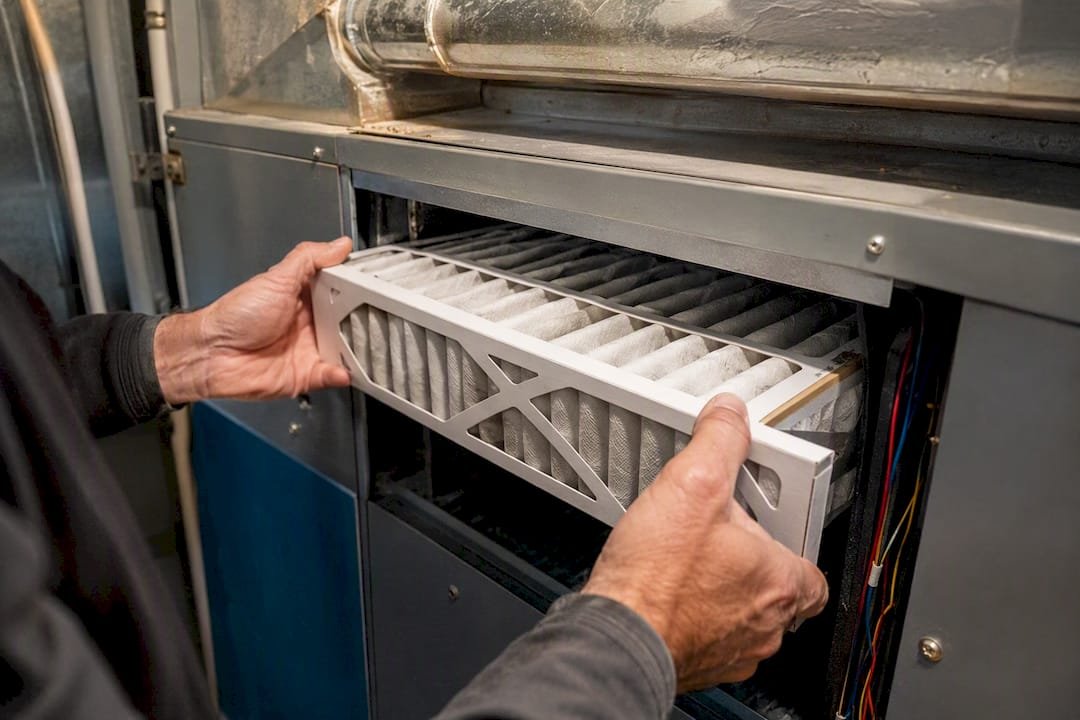
Humidity guidance varies slightly by source. Health Canada’s draft office IAQ guidance recommends the 30% to 50% band, while some other references extend the upper bound to 60%. Either way, humidity above 60% is a mold and dust-mite risk, and below 30% dries out eyes, throats, and static-prone carpets.
On filtration, MERV 13 traps particles down to about 0.3 microns, including many virus-containing droplets, but it also increases pressure drop. If your air handler wasn’t designed for that resistance, you can lose 20% to 30% of system airflow, which defeats the purpose. Check fan capacity before upgrading.
Use these targets alongside, not instead of, the standards bodies that set them. The 2025 update to ASHRAE 62.1 pushes toward demand-controlled ventilation and tighter humidity control, adjusting airflow to actual occupancy rather than a fixed all-day rate. OSHA doesn’t publish its own ppm targets, so ASHRAE and EPA numbers are what an inspector or consultant will reference when evaluating your building under the General Duty Clause.
How Should You Prioritize IAQ Fixes and Upgrades?
Fix the source first, then the ventilation, then the filtration, and only add supplemental air cleaning once those three are handled. Skipping straight to a fancy air purifier while a printer bank sits eighteen inches from someone’s desk is backwards, and it wastes money.
Immediate (this week, low cost):
- Relocate printers, copiers, and any strong-odor equipment out of open workstations. This single move is often the highest-impact, lowest-cost intervention available in offices.
- Open windows where possible during mild weather.
- Deploy portable HEPA units in complaint zones, avoiding any unit marketed as an “ionizer” or ozone generator.
Short-term (this quarter):
- Adjust the outdoor air fraction on the air handler and rebalance dampers that have drifted out of spec.
- Upgrade filters toward MERV 13 only after confirming the fan and static pressure can handle it.
- Add CO2-based demand control to zones with variable occupancy.
Long-term (capital budget):
- Upgrade or replace aging air handling units.
- Consider a dedicated outdoor air system (DOAS) for buildings with persistent ventilation shortfalls.
- Integrate advanced filtration or HEPA banks into the central system rather than relying on portables room by room.
Every tier carries tradeoffs. Higher filtration means higher energy cost and possible fan strain. A DOAS solves ventilation but requires real construction budget and downtime. Weigh cost against the size of the complaint pattern, not against what sounds impressive in a capital plan.
Pro Tip: Size a portable HEPA unit to the room, not the building. Match its rated clean air delivery rate to at least four to five air changes per hour for that specific room’s square footage, and portables become a genuinely high-impact bridge while you plan the capital fix.
What HVAC Maintenance Keeps Office Air Healthy?
Change filters on schedule, inspect the condensate pan, clean coils, and confirm outside air dampers actually open. Skip any of these and your HVAC system stops improving air quality and starts degrading it, since EPA guidance is explicit that poorly maintained systems become pollutant sources rather than solutions.
- Filter changes: quarterly for MERV 8 to 11 in typical office use, though high-occupancy or high-pollution environments may need monthly swaps. Confirm static pressure hasn’t spiked after any MERV upgrade.
- Condensate pan and coil inspection: check monthly. A stagnant pan is a documented microbial growth risk that spreads through duct work once the fan runs.
- Outside air damper verification: confirm quarterly that dampers move through their full range and aren’t stuck at minimum position, which silently starves a building of fresh air.
Keep a simple IAQ log tracking differential pressure across filter banks, HVAC runtime hours, and the dates of occupant complaints side by side. Patterns jump out fast once complaint dates start lining up with filter age or a damper stuck shut.
Pro Tip: A $15 magnehelic gauge across your filter bank tells you more about real-world filter performance than any manufacturer spec sheet, because it reflects your actual duct system, not a lab test.
Who Is Responsible for Office Air Quality?
Occupants control source control, facility teams control ventilation and maintenance, employers set policy and escalation paths, and contractors handle technical repairs. That split isn’t arbitrary. It mirrors how the EPA’s occupant guide frames IAQ as a genuine partnership rather than one party’s job.
- Occupants: don’t block vents with boxes, report odors promptly, avoid bringing in strong-scented products.
- Facility managers: keep filters current, monitor CO2 and humidity, and adjust ventilation for occupancy shifts.
- Employers: set a clear complaint escalation process and budget for fixes, since OSHA’s General Duty Clause makes ignoring a known hazard a liability.
- Contractors: handle duct cleaning, AHU repair, and anything requiring specialized tools or refrigerant work.
Escalate immediately for repeated CO2 exceedances, any visible mold growth, or a chemical spill. Those cross from “facility housekeeping” into “call someone now.”
When Should You Call an HVAC or IAQ Professional?
Call in a professional once CO2 persistently runs above 1,000 ppm despite adjustments, PM2.5 spikes repeatedly across multiple readings, mold is visible anywhere in the space, or occupants report symptoms that resolve when they leave the building. Those are the thresholds where DIY triage has done what it can.
A qualified HVAC or IAQ contractor typically offers:
- Air balancing to correct uneven ventilation between zones.
- Duct cleaning where contamination or debris is confirmed, not just suspected.
- AHU repair or component replacement when a damper, coil, or fan is underperforming.
- Advanced filtration integration, including HEPA banks sized correctly for existing ductwork.
Before hiring, ask what diagnostic equipment they bring, whether they’ll provide before-and-after readings, and how they document the fix. Hvac-prime’s repair and installation services cover exactly this kind of diagnostic and remediation work, alongside the refrigerant and parts supply contractors need to close out the job without a second vendor call.
How Do You Respond to a Chemical Spill or Mold Outbreak?
Evacuate the affected area first, then ventilate, then investigate. That order matters more than speed on any single step, because sending people back into a space before you know what’s in the air just multiplies exposure.
For a chemical spill or strong odor event (cleaning product mix-up, solvent leak, a strong “new paint” smell that triggers complaints):
- Clear the immediate area and shut the door if possible.
- Increase outdoor air ventilation to that zone immediately, opening windows if available.
- Identify the source using safety data sheets on hand, don’t guess.
- Keep the space closed to occupants until VOC readings drop back to baseline.
For a mold outbreak (visible growth, musty odor spreading, water intrusion history):
- Isolate the area, especially if the visible growth exceeds roughly ten square feet.
- Identify and stop the moisture source first. Painting over active mold without fixing the leak guarantees it returns.
- Bring in remediation professionals for anything beyond a small, contained patch. This isn’t a job for a spray bottle and good intentions.
- Document the incident, the fix, and follow-up air testing in your IAQ log for future reference.
Every office should have this response sequence written down and posted somewhere facility staff can find it in under a minute, not buried in a policy binder nobody has opened since orientation. The OSHA General Duty Clause applies here too: once a hazard is known, delay becomes the liability, not the hazard itself.
Do Indoor Plants and Biophilic Design Actually Improve Air Quality?
Plants help morale and perceived comfort more reliably than they scrub meaningful pollutant volume from real office-sized air spaces. The often-cited idea that a few desk plants meaningfully cut CO2 or VOCs in a typical office doesn’t hold up at real-world scale. Even the volume of air in a small conference room dwarfs what a handful of potted plants can process.
That said, plants aren’t worthless. The same intervention study that tracked CO2 and PM2.5 across multiple offices included adding indoor plants as one of several combined interventions alongside relocating printers and optimizing ventilation using real CO2 data. The plants were part of a package, not a standalone fix.
Biophilic design, more broadly, covers natural light access, views of greenery, and materials that avoid off-gassing, and it tends to support the psychological side of comfort even when its direct pollutant impact is modest. If you’re renovating anyway, prioritizing low-VOC furniture and finishes does more for measurable air quality than a wall of ferns. Treat plants as a nice addition to a ventilation and filtration plan already doing the heavy lifting, not a replacement for either.
How Should IAQ Management Change by Season?
Summer humidity, winter dryness, and shoulder-season pollen all shift what your HVAC system needs to do, and a static year-round setting rarely serves all three well.
Watch for condensation on ductwork or windows, an early mold-risk signal.
Some buildings need supplemental humidification to stay in range.
Shoulder seasons (spring and fall) often see the most window-opening, which is great for ventilation but can introduce outdoor pollen or particulate if your outdoor air quality index is elevated that day. Check local air quality reports before propping doors open on a high-ozone afternoon.
Extreme weather events, wildfire smoke drifting in from hundreds of miles away, or a sudden cold snap that has facility staff cranking the heat, both call for a temporary pivot: tighten outdoor air intake during smoke events, and keep an eye on humidity swings during rapid heating or cooling transitions. This is exactly where ASHRAE’s push toward demand-controlled ventilation pays off. Systems that adjust to real conditions handle these swings far better than ones locked to a fixed year-round schedule.
Can Smart Monitoring and Building Automation Improve IAQ?
Continuous sensor networks tied into building automation catch problems that a quarterly spot-check will always miss, simply because they’re running while nobody’s watching. A CO2 spike at 4 PM on a Tuesday, three weeks before your next scheduled walk-through, goes completely undetected without one.
Modern IAQ monitoring setups combine CO2, PM2.5, VOC, humidity, and temperature sensors feeding into a dashboard that flags exceedances in real time and, in more advanced setups, automatically adjusts damper position or fan speed in response. That’s demand-controlled ventilation in practice, not just in a standards document. Facility teams evaluating this kind of building energy and occupancy analytics often compare platforms on data granularity and integration depth, an area covered in detail by resources like Meter Ready’s building analytics comparisons.
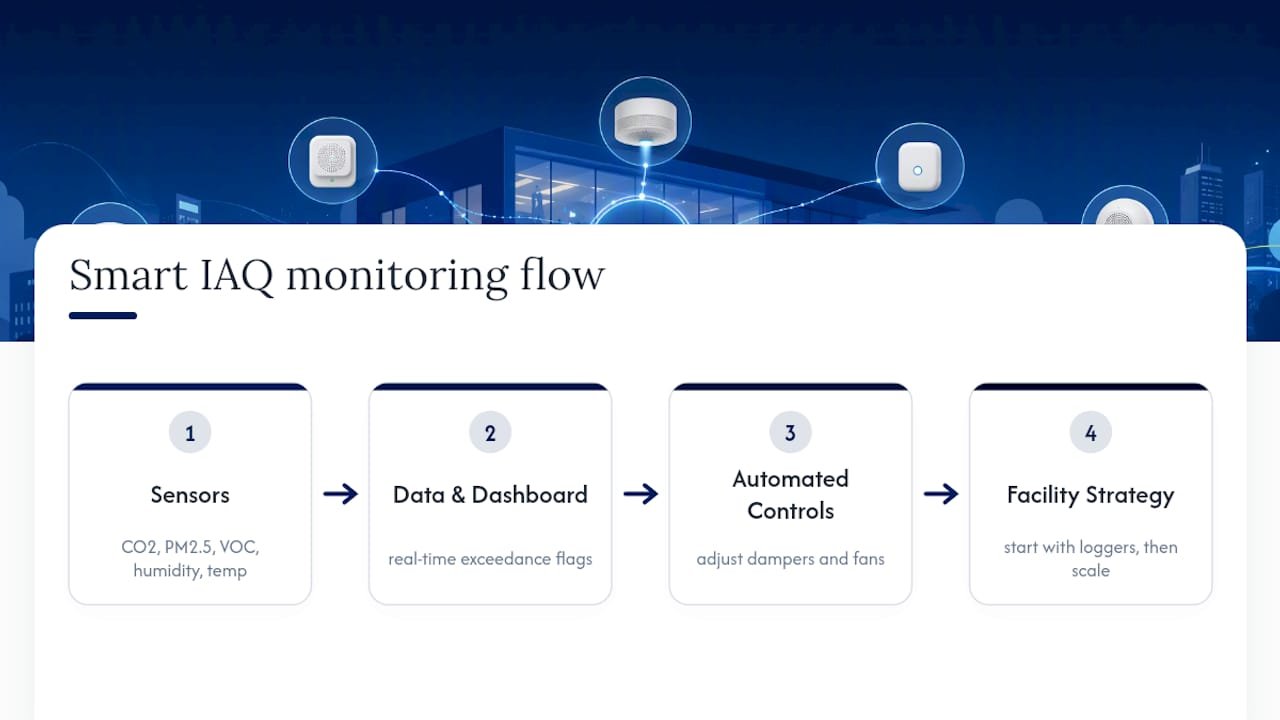
The honest tradeoff is upfront cost and integration complexity. A basic standalone CO2 logger costs little and tells you plenty on its own. A fully networked system that talks to your building automation platform costs more and takes real setup time. For most single-building office operations, start with standalone loggers in high-traffic zones, build a baseline, and scale toward automation only once you’ve identified the zones that actually need continuous tracking rather than periodic checks.
What I’ve Learned Running IAQ Programs on Real Buildings
Start small. Measure one thing well before chasing five. The buildings where IAQ programs actually stick are the ones that picked a single zone, logged CO2 and complaints for two weeks, and fixed one clear problem before expanding.
Two lessons repeat everywhere: tell occupants what you’re doing and why, because a silent sensor installation reads as surveillance and breeds complaints instead of trust. And track interventions against symptoms, not against instinct. The fix that “feels” right and the fix the data supports aren’t always the same thing.
Keep Your Office HVAC System Running Clean With Hvac-prime
Every fix in this guide eventually runs into the same wall: does your HVAC system have the parts and refrigerant on hand to actually execute it? Hvac-prime supplies wholesale virgin refrigerants and HVAC accessories alongside repair, installation, and maintenance services delivered by certified technicians, so a diagnostic visit and the parts to fix what it finds don’t require two separate vendors.
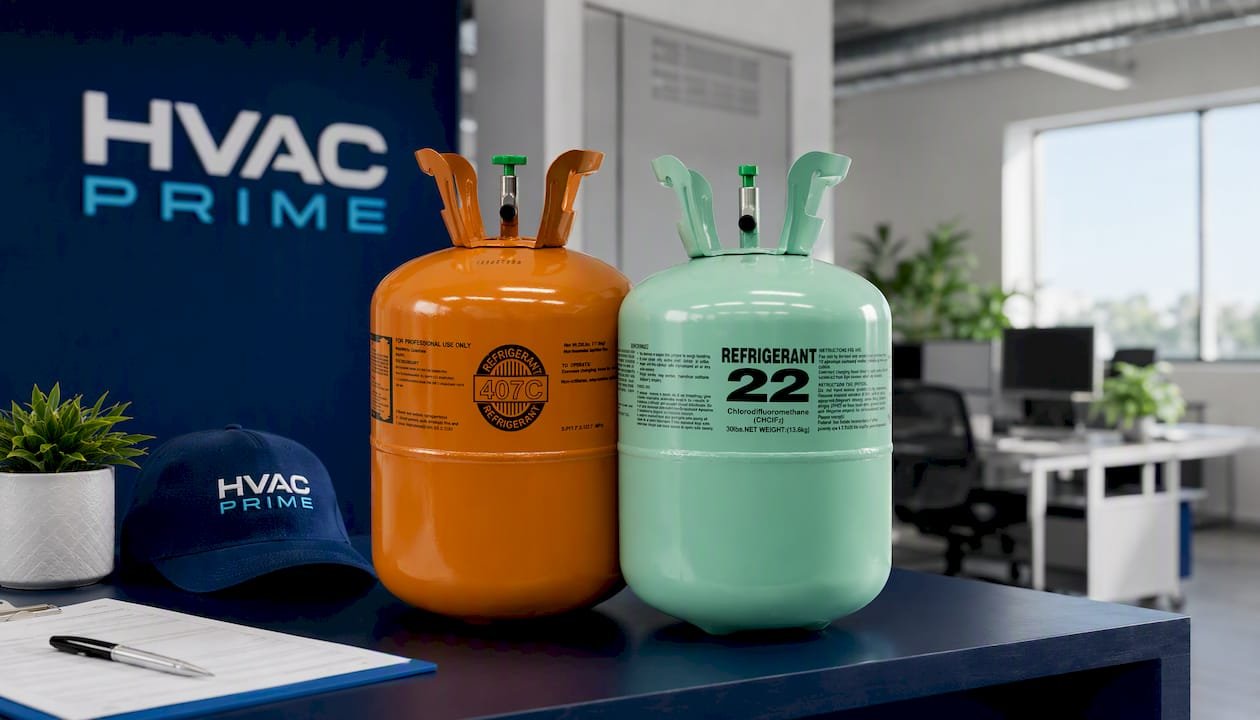
If your air handler needs a recharge as part of an IAQ fix, the 25LBS R407C refrigerant is stocked and ready to ship fast, alongside gauges, vacuum pumps, and diagnostic tools for teams running their own assessments. Facility managers juggling filter changes, damper checks, and coil cleaning on top of everything else don’t need a slow parts order holding up the job.
Request a service quote or browse the full refrigerant and accessories catalog today, and get the diagnostic visit scheduled before your next occupant complaint turns into an OSHA conversation.
Frequently Asked Questions
What is a good CO2 level for an office?
Under 800 to 1,000 ppm during occupied hours generally indicates adequate ventilation. Readings that climb past 1,000 ppm for extended periods signal the outdoor air supply isn’t keeping pace with occupancy.
What MERV rating should an office HVAC filter be?
MERV 8 to 11 works for most standard commercial office systems.
How often should office air filters be replaced?
Quarterly is typical for MERV 8 to 11 in normal office use, though high-occupancy spaces or elevated outdoor pollution may call for monthly changes.
Can indoor plants really clean office air?
Not at meaningful scale on their own. Plants support comfort and complement source control and ventilation fixes, but they don’t replace them for real pollutant reduction.
Who is responsible for fixing poor office air quality?
Responsibility splits across occupants (avoiding pollutant sources), facility teams (ventilation and maintenance), employers (policy and escalation), and contractors (technical repairs), per EPA’s shared-responsibility framework.
This article is general information, not a substitute for advice from a qualified doctor. Consult a qualified healthcare professional about your own circumstances before acting on anything here.
Sources
- Indoor Air Quality – Overview (OSHA FAQs)
- An Office Building Occupant’s Guide to Indoor Air Quality (EPA)




 HVAC
HVAC Automotive
 Refrigerant Diagnostics Kit
 Water Heaters