
3 Quick Checks Technicians Use to Identify Automotive AC Refrigerant

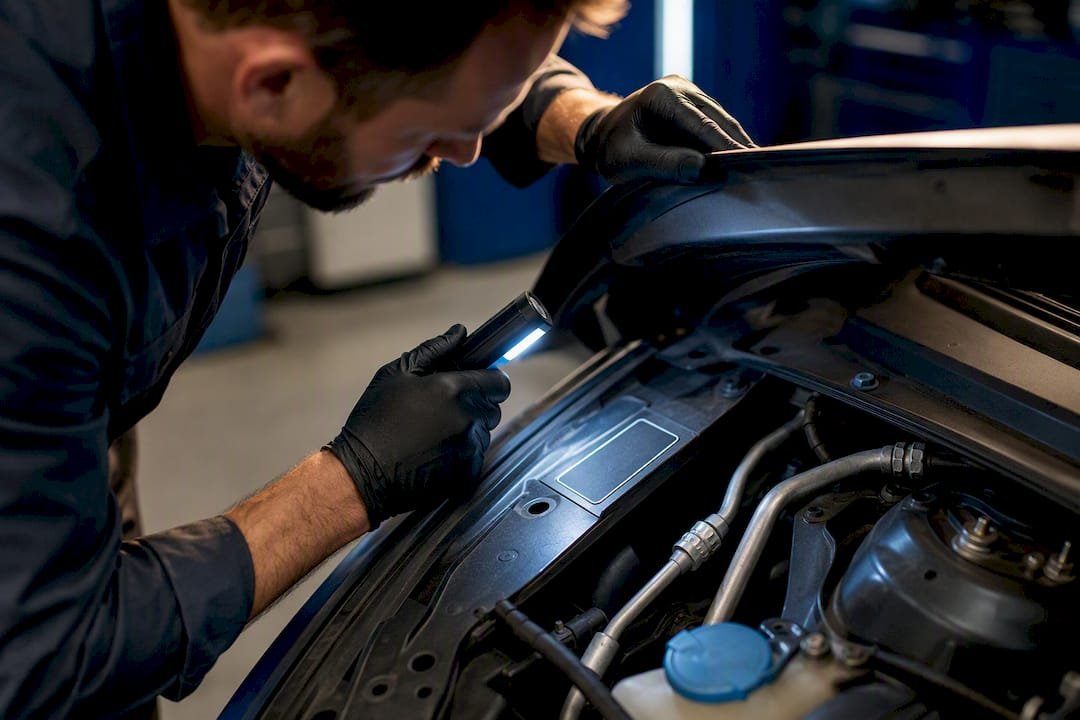
Three refrigerants matter in modern automotive air conditioning: R-12, R-134a, and R-1234yf, each tied to a distinct vehicle era and none of them interchangeable. The underhood label is the authoritative way to confirm which one your car takes, and mixing them up risks damaged fittings, ruined compressor oil, and a system that never cools right again.
TL;DR:
- Always verify the refrigerant type on the underhood label, as it is the primary and most reliable source of information.
- Using the wrong fittings or forcing adapters onto service ports can cause system damage; know the physical differences between R-134a and R-1234yf ports.
- Retrofits from R-134a to R-1234yf require replacing the compressor, hoses, fittings, and oil, and are generally not cost-effective for most vehicles.
- Servicing R-1234yf systems demands YF-specific equipment, leak detectors, and safety precautions due to its mild flammability.
- R-1234yf costs significantly more than R-134a, and proper identification, equipment, and handling are essential to avoid costly mistakes and system damage.
Table of Contents
- Automotive AC Refrigerant Types: How to Identify Which One Your Car Uses
- Refrigerant Profiles: R-12, R-134a, R-1234yf, and the Alternatives Worth Knowing
- Safety and Servicing: What Changes When You Work on an A2L System
- What Refrigerant Type Costs You at the Pump and at the Counter
- Retrofit Compatibility: When a Refrigerant Swap Actually Makes Sense
- Regulatory Rules Every Shop Needs to Know
- Where to Source Compliant Refrigerant and YF Equipment
- The Real Lesson Behind the Refrigerant Switch
- Get Your Refrigerant Supply Sorted Before the Next Job
- Sources
Automotive AC Refrigerant Types: How to Identify Which One Your Car Uses
You don’t have to guess. Every vehicle built since the mid 1990s carries a physical record of its refrigerant type, and checking it takes about two minutes with the hood up.
Step 1: Read the underhood label. Manufacturers stamp a sticker, usually on the underside of the hood or near the AC compressor or condenser, listing the refrigerant type, charge weight, and often the oil type. This label is the single most reliable source you have. Model year gives you a hint, but the EPA notes that the switch to R-1234yf was mandated for new light-duty vehicles by model year 2021, and some manufacturers started years earlier voluntarily.
Step 2: Inspect the service ports. R-134a and R-1234yf use physically different fitting sizes and shapes specifically so a technician can’t cross-charge a system by accident. R-1234yf ports are slightly larger in diameter than R-134a’s, with a different quick-connect profile. If a fitting doesn’t seat cleanly, stop. Never force an adapter onto a service port to make a gauge set fit.
Step 3: Run a VIN lookup when the label is missing or unreadable. Labels do get painted over, peeled off, or replaced during bodywork. A dealer parts department or a manufacturer service database can confirm factory refrigerant specs from the VIN in most cases.
The 2014 through 2020 window is where guesswork gets people in trouble. Some European and a few domestic models adopted R-1234yf years ahead of the broader industry, so a 2016 model might already be running YF while its badge-mates from the same lot still used R-134a. Treat model year as a clue, never a confirmation.
- Underhood label: the primary source of truth
- Service port shape and size: a physical safeguard against cross-charging
- VIN or dealer lookup: your backup when the label is gone
- Model year: useful context, unreliable as a standalone answer
Pro Tip: Keep a phone photo of every underhood label you check. Six months later, when a customer calls about a slow leak, you won’t need to pull the hood again.
Refrigerant Profiles: R-12, R-134a, R-1234yf, and the Alternatives Worth Knowing
Each of these chemicals behaves differently in a system, and the differences go well beyond the can label.
R-12 (CFC-12) was the standard in automotive AC through 1993. It’s a chlorofluorocarbon, and its chlorine content made it one of the primary drivers of stratospheric ozone depletion. Production for new vehicles was banned domestically starting in 1994, and virgin R-12 has been effectively unavailable for decades. If you’re working on a classic car that still runs R-12, your realistic options are reclaimed R-12 (expensive and increasingly scarce) or a retrofit to R-134a using a conversion kit. Neither is cheap, and neither is simple.
R-134a (HFC-134a) took over as the dominant automotive refrigerant from 1994 through roughly 2020. It’s a hydrofluorocarbon with zero ozone-depletion potential, which solved the R-12 problem, but it carries a global warming potential of about 1,430, meaning a pound of it released into the atmosphere traps roughly 1,430 times the heat of a pound of CO2 over a century. It’s classified A1, non-flammable and low toxicity, which is part of why it became the industry default for a quarter century. Systems designed for R-134a typically use PAG oil formulated for that refrigerant, and servicing it requires no special ventilation or ignition precautions beyond standard shop practice.
R-1234yf (HFO-1234yf) is a hydrofluoroolefin, a newer chemical class engineered specifically to solve R-134a’s climate problem. Its GWP sits at roughly 4, a fraction of a percent of R-134a’s footprint, while delivering comparable cooling performance according to manufacturer data from Chemours. That performance parity matters: automakers didn’t switch because YF cools better, they switched because regulators capped how much warming potential a new vehicle’s refrigerant charge could carry. The tradeoff is safety classification. R-1234yf is rated A2L, mildly flammable, which changes how shops need to store it, detect leaks, and handle recovery. It also requires its own PAG YF oil formulation and YF-specific service port sizing, both intentional design choices to prevent a technician from accidentally topping off a YF system with R-134a equipment.
A few other refrigerants show up in the conversation without dominating it. EPA’s technical guidance on climate-friendly MVAC refrigerants lists CO2 (R-744) and HFC-152a as SNAP-approved alternatives subject to use conditions. CO2 systems run at much higher operating pressures and need purpose-built hardware, which has limited adoption mostly to a handful of European models. HFC-152a is mildly flammable like R-1234yf but never gained meaningful traction in production vehicles, largely because YF got to market first with OEM backing already in place.
Here’s the quick comparison technicians actually reference on the job:
| Refrigerant | GWP | Safety class | Typical vehicle era |
|---|---|---|---|
| R-12 | High (ozone-depleting) | A1 | Pre-1994 |
| R-134a | ~1,430 | A1 | 1994 to ~2020 |
| R-1234yf | ~4 | A2L | 2014 onward, standard by 2021 |
| CO2 (R-744) | 1 | A1 | Niche, mostly European |
| HFC-152a | Low | A2 | Rare, limited adoption |
Chemours’ own positioning on YF backs up something worth sitting with: this transition was never about a refrigerant that cools better. It’s regulation that reshaped the refrigerant, and manufacturers engineered everything else, compressors, oils, fittings, around that regulatory target.
Safety and Servicing: What Changes When You Work on an A2L System
Working on an R-1234yf system isn’t the same job as R-134a with a different can. The mild flammability of A2L refrigerants changes your equipment list and your shop procedures.
- Use YF-specific manifold sets and leak detectors. R-1234yf equipment is built and calibrated for a mildly flammable refrigerant; using R-134a gauges on a YF system, even if you could force the fitting, risks inaccurate readings and cross-contamination. Port keying exists precisely to stop this at the hardware level.
- Match the oil to the refrigerant, every time. PAG oil for R-134a and PAG YF for R-1234yf are chemically different formulations. Mixing them doesn’t just reduce lubrication, it can compromise compressor seals and shorten compressor life. Never assume a “close enough” oil swap is fine.
- Follow Section 609 recovery rules without exception. Under the Clean Air Act, venting refrigerant is illegal regardless of type, and recovery equipment is mandatory for any system service. This isn’t a suggestion tied to environmental preference, it’s federal law with real penalties for shops that skip it.
- Control ignition sources when handling A2L refrigerant. Ventilate the work area, keep open flames and sparking tools away from a recovery station, and wear the same PPE you’d use for any pressurized refrigerant work, safety glasses and gloves at minimum.
Pro Tip: Before you crack open any system with an unfamiliar or missing label, run a refrigerant identifier first. A five-minute check beats discovering contamination after you’ve already added a full charge.
Shops that skip these steps aren’t just risking a comeback. They’re risking a system that never seals properly again because the wrong oil degraded a seal that can’t be un-degraded.
What Refrigerant Type Costs You at the Pump and at the Counter
R-1234yf costs more than R-134a, often substantially more, both as a retail can and as a shop line item. Part of that comes down to production complexity: HFOs are a newer, more involved chemical synthesis than the HFCs they’re replacing. Part of it is simple supply and demand during a transition period where YF-specific equipment still isn’t universal in every independent shop.
Treat any specific dollar figure you see online as a rough estimate rather than a quote. Regional pricing, current refrigerant supply, and whether a shop already owns YF-compatible recovery equipment all swing the number more than people expect.
A few practical guardrails worth following:
- DIY recharge kits are reasonable only when you’ve confirmed the system runs R-134a and the refrigerant hasn’t been contaminated by a prior improper service.
- A shop should refuse to service a system with unknown or suspected mixed refrigerant until it’s been identified, full stop, because charging blind risks the customer’s compressor and your equipment.
- Full retrofits from R-134a to R-1234yf are rarely worth it on an otherwise healthy older vehicle. The parts and labor involved usually cost more than the vehicle’s remaining service life justifies.
- If a system needs frequent recharges, chase the leak before you chase a refrigerant swap. A retrofit doesn’t fix a leaking evaporator.
Retrofit Compatibility: When a Refrigerant Swap Actually Makes Sense
Most vehicles are not good retrofit candidates, and the reasons come down to more than just “different gas in the can.”
Oil chemistry is the first wall you hit. PAG oils formulated for R-134a aren’t compatible with the additive packages R-1234yf systems need, and the expansion devices, fittings, and even hose materials in older systems weren’t engineered around A2L’s slightly different pressure and flammability profile. Bolt YF into a system built for R-134a without changing anything else and you’ll likely see reduced cooling performance at best, a damaged compressor at worst.
If a retrofit genuinely makes sense for a specific vehicle, here’s the compliant path:
- Recover and properly dispose of the existing refrigerant charge.
- Replace the compressor, or confirm it’s rated for the new refrigerant and oil.
- Replace hoses, O-rings, and fittings to match the new refrigerant’s service port standard.
- Flush the system fully and refill with the correct oil type for the new refrigerant.
- Replace the receiver-drier or accumulator, since residual moisture and old refrigerant traces compromise the new charge.
Watch for red flags that mean walk away: a compressor already near end of life, a system with a chronic leak history, or a vehicle whose remaining value doesn’t cover the retrofit’s parts and labor. In those cases, a straightforward like-for-like repair almost always beats a conversion.
Regulatory Rules Every Shop Needs to Know
The EPA’s Technology Transitions rule under the AIM Act phases down high-GWP HFCs like R-134a in newly manufactured vehicles, which is the regulatory engine behind the entire industry shift to R-1234yf. That phasedown set the model-year mandate: new light-duty vehicles were required to move to R-1234yf or another qualifying low-GWP refrigerant by model year 2021.
Here’s the detail that trips people up: this rule governs new-vehicle manufacturing, not servicing. A 2018 sedan built with an R-134a system can still be legally serviced with R-134a for the rest of its working life. Nobody is required to retrofit an existing car just because the refrigerant it uses has fallen out of favor for new production.
- The SNAP program (Significant New Alternatives Policy) determines which refrigerants are acceptable for use, subject to conditions.
- The AIM Act phasedown targets total HFC volume, pushing the industry toward low-GWP refrigerants over time.
- Shops must maintain recovery equipment and recordkeeping consistent with Section 609 regardless of which refrigerant they’re servicing.
- Retrofit legality depends on using EPA-approved refrigerants and following manufacturer or SAE-referenced procedures, not on the age of the vehicle.
R-1234yf’s roughly 4 GWP versus R-134a’s approximately 1,430 is the number that explains the entire regulatory push in one comparison.
Where to Source Compliant Refrigerant and YF Equipment
Sourcing matters as much as identification. Hvac-prime supplies virgin refrigerants, including R-134a and R-1234yf, along with YF-compatible cans, recharge kits, and downloadable SDS and TDS documentation for every product line.
Before you buy from anyone, check three things: purity certification, batch traceability, and a readily available safety data sheet. A shop that can’t produce SDS documentation for the refrigerant it used is exposed if a comeback turns into a liability question.
Pro Tip: When ordering for a YF job, order the PAG YF oil and YF-keyed charging equipment in the same order as the refrigerant. Mismatched oil delivered a week later stalls the job and the customer’s patience.
The Real Lesson Behind the Refrigerant Switch
The conventional advice on this topic treats refrigerant identification as a footnote, something you glance at before grabbing whatever gauge set is closest. That’s backward. The label check is the entire job in miniature: skip it, and every downstream decision, which oil, which fittings, which recovery procedure, is built on a guess.
What gets underrated is how deliberately engineered this transition was. R-1234yf wasn’t chosen because it performs better in a vacuum. It exists because regulators set a GWP ceiling and manufacturers built systems around meeting it, port keying and all. That’s worth remembering the next time someone suggests a shortcut retrofit or claims one refrigerant is universally “better.” Better for what, and better under which rule, are two different questions.
If you take one thing from this, take the discipline of checking before you charge. Vehicle owners should learn to read their own underhood label. Technicians should treat unknown refrigerant as a stop condition, not a minor inconvenience. That habit prevents more comebacks than any piece of equipment you’ll buy this year, including the equipment covered by the partner guidance on modern auto repair workflows worth reviewing alongside your own shop procedures.
— Planet
Get Your Refrigerant Supply Sorted Before the Next Job
You’ve seen how much rides on using the right refrigerant, the right oil, and the right equipment for the job in front of you. Hvac-prime exists to make that part easy: wholesale virgin refrigerants, including R-134a and R-1234yf, priced for contractors who don’t want to pay retail markup on every can.
Whether you’re stocking up on high-purity R-134a for routine service calls or need YF-compatible recharge kits and PAG YF oil for a newer platform, Hvac-prime ships fast and backs every order with SDS and TDS documentation your shop can keep on file. That documentation matters more than most shops realize until a liability question comes up mid-job. Browse the refrigerant catalog to check current stock and pricing, or check the professional HVAC tools selection if your gauge set still isn’t YF-rated. Either way, get the right materials ordered before the next vehicle rolls into the bay.
Sources
- Acceptable Refrigerants and their Impacts | US EPA
- Opteon™ YF (R-1234yf) Automotive Refrigerant | Chemours




 HVAC
HVAC Automotive
 Refrigerant Diagnostics Kit
 Water Heaters