
Air Handler Replacement Cost: 2026 Pricing Guide

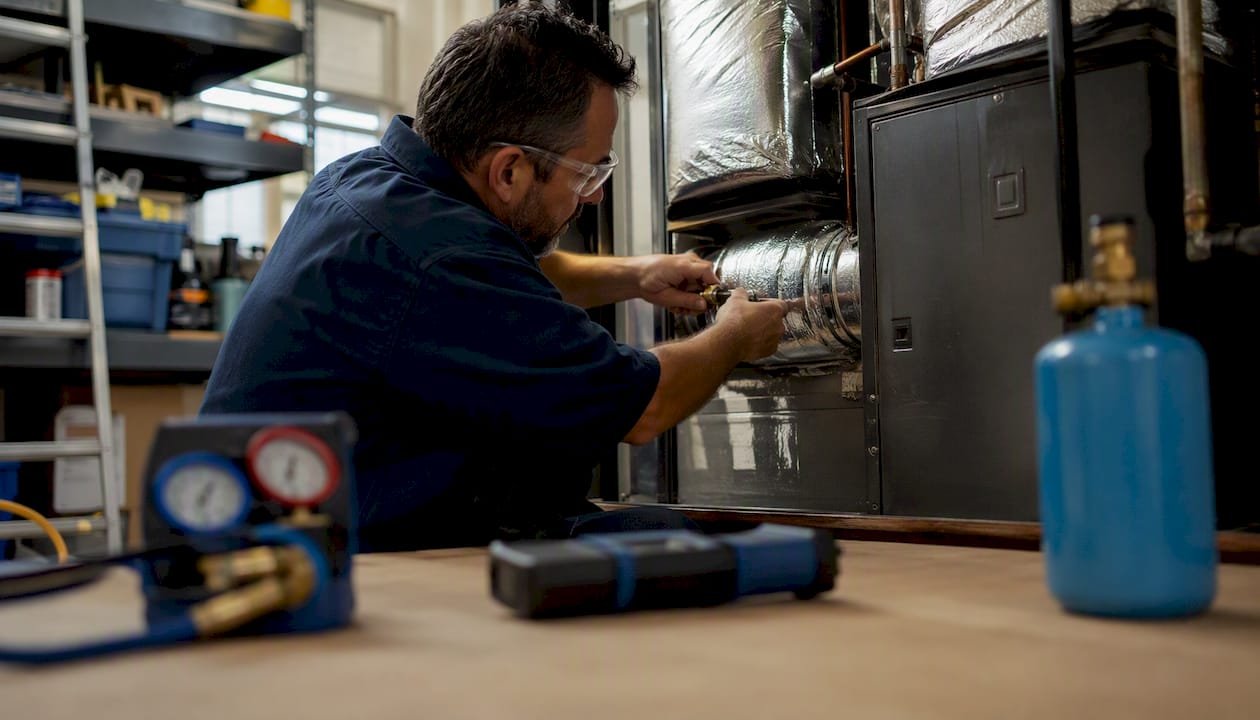
Most homeowners pay between $1,800 and $3,500 for a professionally installed air handler replacement, with a national average near $2,800. That range assumes a straightforward like-for-like swap in an accessible location. Before you call anyone, do two things: request at least three itemized quotes from licensed HVAC contractors, and confirm that your new unit matches the outdoor condenser’s coil and refrigerant type. Skipping either step is where budgets blow up.
Labor is a bigger slice of the bill than most people expect. Technician rates run $60–$150 per hour, and labor often accounts for roughly half the total installed cost. That means a $2,800 project might include $1,300–$1,400 just in labor, before you add permits, disposal, or ductwork.
Key Takeaways
A professionally installed air handler replacement costs $1,800–$3,500 for most U.S. homes, with labor, matched coil, permits, and disposal often adding $1,200–$2,000 beyond the unit price alone.
| Point | Details |
|---|---|
| National installed range | Most homeowners pay $1,800–$3,500; the national average runs near $2,800. |
| Labor share | Labor typically represents roughly half the total cost, at $60–$150 per hour. |
| Matched components | Confirm the new handler matches the outdoor condenser’s coil and refrigerant type to preserve the warranty. |
| Budget a contingency | Add 10–15% above your quote total for ductwork surprises, electrical upgrades, or refrigerant line repairs. |
| Hvac-prime | Hvac-prime supplies wholesale virgin refrigerants and contractor tools, and books certified installation services across the United States. |
Table of Contents
- What does air handler replacement cost at a glance?
- How does capacity (tonnage) affect your replacement cost?
- How does air-handler type change what you pay?
- What does a full installed replacement actually cost, line by line?
- Can you replace only the air handler, or do you need a full system swap?
- When should you replace instead of repair?
- How does your region affect the price, and how long does the job take?
- How do you get an accurate quote from a contractor?
- What do Trane, Carrier, and Lennox cost, and how do they compare?
- How can you cut costs without cutting corners?
- Why licensed pros, correct refrigerant, and matched parts matter
- What actually matters when you’re budgeting for this
- Hvac-prime supports your air handler replacement from parts to installation
- Sources
What does air handler replacement cost at a glance?
The gap between “unit only” and “installed” is significant. HomeGuide puts unit-only prices at $700–$1,600, with installation labor adding another $800–$1,800 on top, producing totals commonly between $1,500 and $3,400. HomeAdvisor’s data aligns closely, showing a typical installed range of $1,800–$3,500.
| Cost Component | Typical Range |
|---|---|
| Unit only (equipment) | $700–$1,600 |
| Installation labor | $800–$1,800 |
| Installed total (standard swap) | $1,500–$3,500 |
| National average (installed) | ~$2,800 |
| Complex installs (duct work, rigging) | Up to $11,000 |
Several factors push a project toward the high end:
- Labor rates vary by region. A coastal metro technician may charge $130–$150/hr; a Midwest market might run $60–$80/hr.
- Permit fees range from $50 to $300+ depending on the municipality.
- Ductwork repairs add $10–$40 per linear foot if the existing ducts are damaged or undersized.
- Matched coil replacement is often required alongside the handler, adding $400–$900 to the project.
PickHVAC notes that simple like-for-like swaps stay at the low end; adding new coils, major ductwork, or rooftop rigging rapidly increases labor hours and total cost.
How does capacity (tonnage) affect your replacement cost?
Tonnage is the single biggest driver of unit price. A 1.5-ton handler for a small condo costs far less than a 5-ton unit for a large home, and the labor to handle a heavier, larger cabinet adds time too.
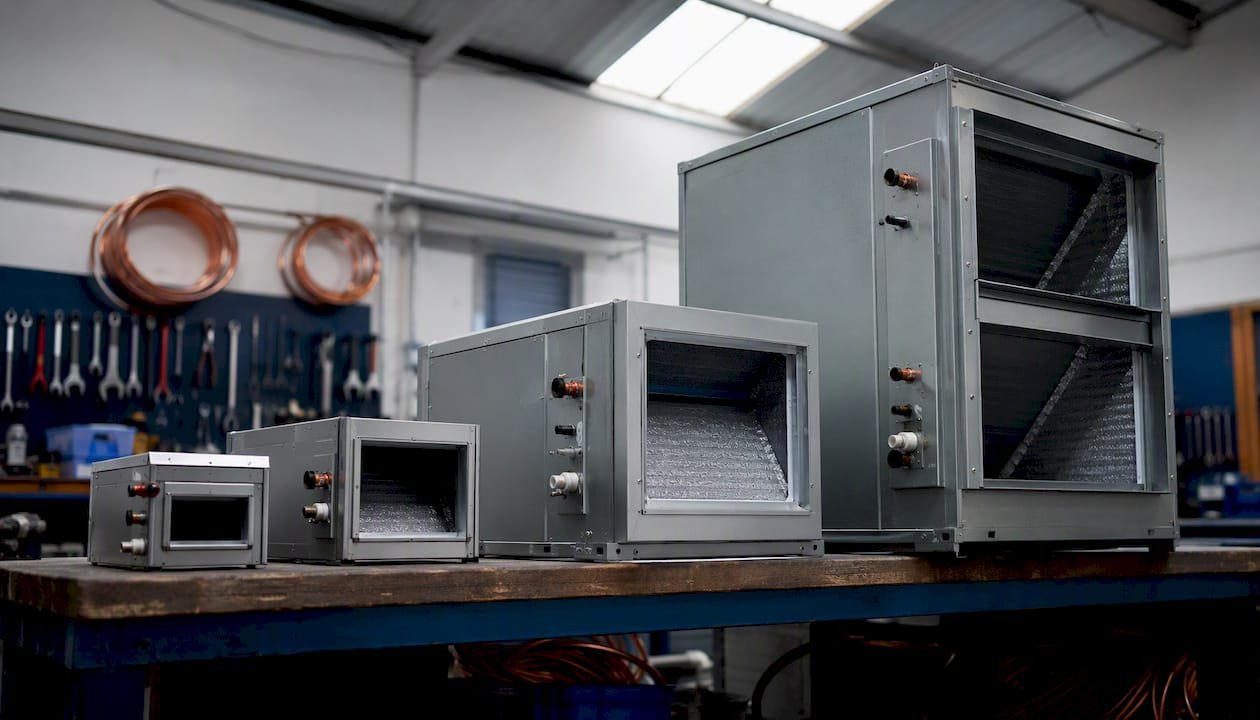
These ranges come from HomeAdvisor’s per-ton cost data and reflect installed totals for standard residential swaps.
A few practical examples: a 1,500-square-foot ranch house in the Southeast typically uses a 2.5-ton unit; a two-story 2,400-square-foot home in the Midwest usually needs 3–3.5 tons; a 3,200-square-foot home in a hot-humid climate like Houston may require 4 tons or more.
Tonnage alone does not tell the whole story. Ceiling height, insulation quality, window area, and local climate all affect what a Manual J load calculation will recommend. A contractor who quotes a size without running that calculation is guessing.
Pro Tip: Ask every contractor for their Manual J load calculation before they quote a tonnage. If they can’t produce one, that’s a red flag worth taking seriously.
How does air-handler type change what you pay?
The technology inside the cabinet matters as much as the size on the label. Here is how the main types stack up on upfront cost, efficiency, and comfort:
- Single-speed (PSC motor): The most affordable option, typically $1,500–$2,500 installed. It runs at full blast or not at all, which means more temperature swings and higher energy use. Fine for budget-focused replacements in mild climates.
- Multi-stage: Runs at two or more speeds, improving humidity control and comfort. Installed cost generally falls in the $2,200–$3,200 range. A solid middle ground for most homeowners.
- Variable-speed (ECM motor): The most efficient residential option. The blower adjusts continuously, cutting energy use and dramatically improving dehumidification. Installed cost typically runs $3,000–$4,500. The higher upfront cost often pays back through lower monthly utility bills.
- Hydronic air handler: Uses hot or chilled water from a boiler or chiller instead of a refrigerant coil. Common in commercial buildings and some high-end residential applications. Costs vary widely, but installed totals of $3,500–$7,000+ are common depending on the water-source system.
SEER2 ratings (the updated efficiency standard that replaced SEER in 2023) are tied directly to the blower motor type. A variable-speed ECM motor is what allows a system to achieve high SEER2 ratings, which affects both operating cost and code compliance in some states. Choosing a single-speed handler to save money upfront can lock you into a lower SEER2 rating that costs more every month to run.
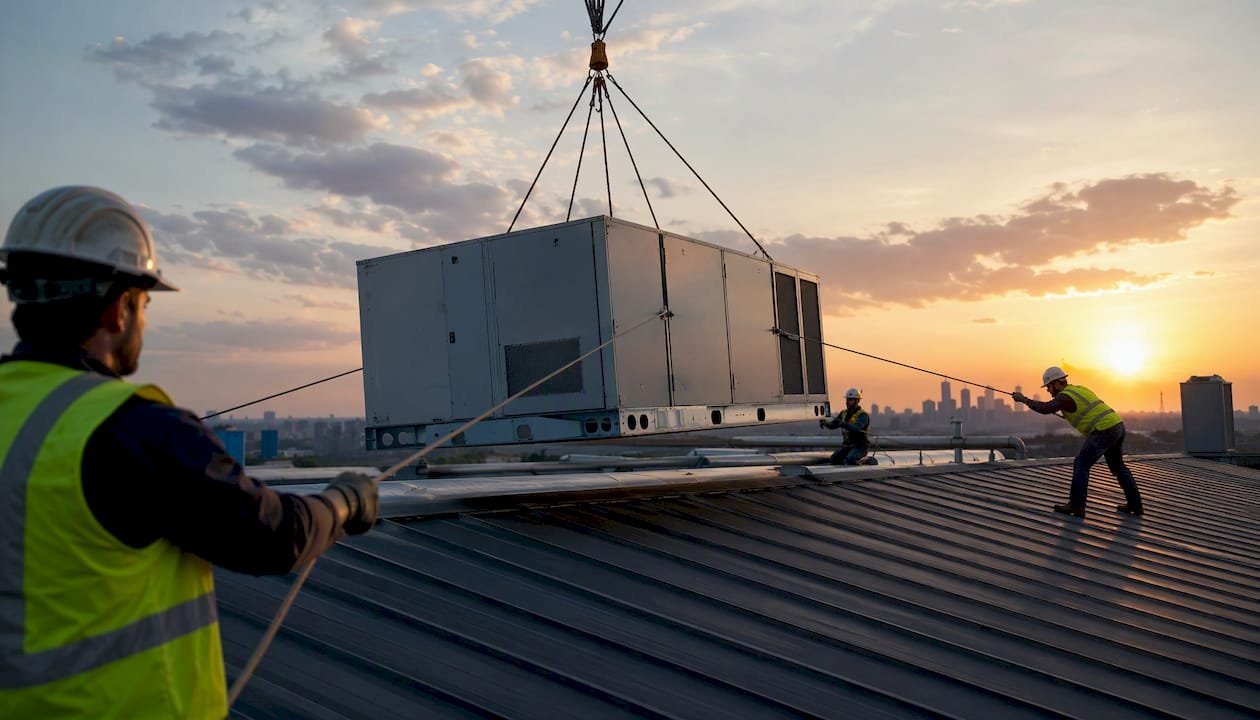
Specialty and commercial units carry their own cost tier. Rooftop units (RTUs) for commercial properties or flat-roof homes require crane or hoist rigging, which Quality Home Air Care estimates adds $400–$2,000 to the project. A commercial air handler replacement on a rooftop can easily reach $5,000–$11,000 all-in.
What does a full installed replacement actually cost, line by line?
Getting an itemized quote is the only way to compare bids fairly. Here is what a complete air handler replacement typically includes:
| Line Item | Typical Cost Range |
|---|---|
| New air handler unit | $700–$1,600 |
| Matched evaporator coil (if replaced) | $400–$900 |
| Labor (installation, removal, startup) | $800–$1,800 |
| Ductwork repairs or modifications | $200–$800 |
| Electrical upgrades (if needed) | $100–$500 |
| Permits | $50–$300 |
| Old unit disposal | $50–$150 |
| Refrigerant charge (if needed) | $100–$400 |
| Total (standard residential swap) | $1,500–$3,500 |
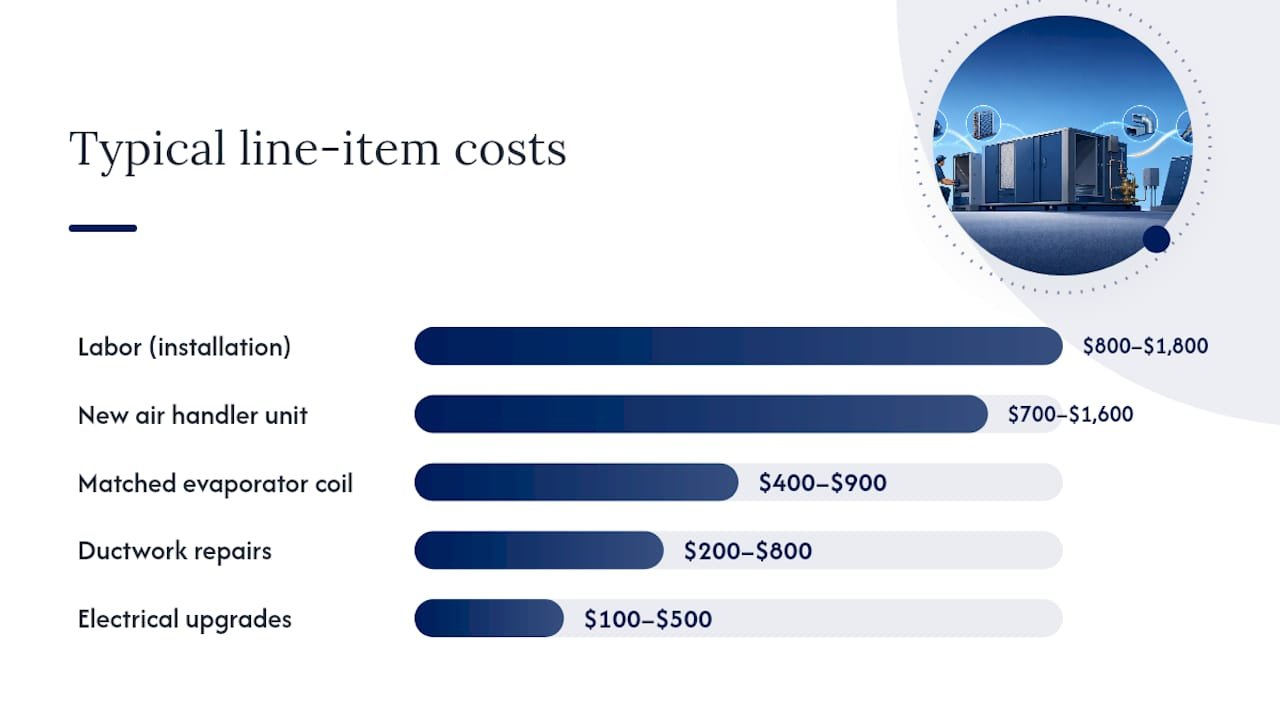
Labor typically represents roughly half of the total installed cost, per HomeAdvisor’s cost analysis. On a $2,800 project, that means $1,300–$1,500 in labor alone. Electrical upgrades, when required, add electrician costs on top of the HVAC technician’s rate, with hourly rates varying by region and complexity.
Optional upgrades add several hundred dollars depending on the features chosen, such as variable-speed motors, smart thermostats, or premium filtration systems.
- Confirm the coil is included or excluded. Many quotes list the air handler unit price without the matched evaporator coil. These are separate line items.
- Check whether permits are included. Some contractors bundle them; others add them as a separate charge after the fact.
- Ask about disposal. Old unit removal and refrigerant recovery should be on the invoice.
- Verify refrigerant type and charge. If the system needs a refrigerant top-off after installation, that cost should be itemized, not buried in a vague “startup fee.”
Pro Tip: If a quote has a line item called “miscellaneous” or “system startup” with no dollar breakdown, ask for it to be itemized. Vague bundled fees are where surprise charges hide.
Can you replace only the air handler, or do you need a full system swap?
This is the question that trips up more homeowners than any other. The short answer: you can replace just the air handler, but only if the new unit is fully compatible with your existing outdoor condenser and evaporator coil.
Here is what to confirm before proceeding:
- Refrigerant compatibility. If your existing system uses R-410A and the new handler is designed for R-32 or R-454B, you cannot simply swap them. Refrigerant type must match across all components. Hvac-prime stocks a full range of virgin refrigerants including R-410A, R-32, and R-454B for contractors who need to confirm or recharge the correct type.
- Matched coil confirmation. The evaporator coil must be rated for the same refrigerant and capacity as the new handler. Mismatched coils reduce efficiency and can stress the compressor.
- SEER2 compliance. Under current Department of Energy rules, replacement systems must meet regional SEER2 minimums. A new handler paired with an old, lower-rated condenser may not meet those minimums.
- Tonnage match. The new handler’s capacity must match the outdoor unit. Oversizing or undersizing creates short-cycling, humidity problems, and premature wear.
- Warranty terms. Most manufacturers require matched-system installations to honor the full parts warranty.
Contractors caution that air handlers must be matched to the outdoor condenser and evaporator coil under modern SEER2 rules. Improper matching can reduce efficiency, trigger warranty denial, and create safety or liability issues. Angi’s cost guide reinforces this: mismatched components are one of the most common reasons warranty claims get denied.
Most new air handlers carry manufacturer parts warranties of 5–10 years, but those warranties typically require matched-system installation by a licensed contractor. Extended warranties and service plans run $100–$500 and may not cover labor costs.
Pro Tip: Before the contractor leaves, get a written record of every model number installed: the air handler, the evaporator coil, and the outdoor condenser. Store that document with your warranty paperwork. You will need it if you ever file a claim.
When should you replace instead of repair?
Air handlers typically last 15–25 years depending on the motor type, maintenance history, and climate. Here is a general lifespan reference:
| Air Handler Type | Typical Lifespan |
|---|---|
| Single-speed (PSC motor) | 15–18 years |
| Multi-stage | 18–20 years |
| Variable-speed (ECM motor) | 20–25 years |
A $1,400 repair on a unit that would cost $2,800 to replace is rarely worth it, especially on a system older than 12–15 years.
Common signs you are past the repair-and-patch stage:
- Airflow has dropped noticeably from multiple vents, even after filter changes.
- Energy bills have climbed without a change in usage patterns.
- The blower motor has needed repair more than once in the past three years.
- You hear grinding, squealing, or rattling from the cabinet.
- The unit cabinet shows visible rust, corrosion, or water damage.
- The system uses R-22 refrigerant, which is no longer manufactured and increasingly expensive to source.
A unit that hits two or more of these signs and is over 15 years old is a strong candidate for replacement rather than another repair cycle. Continuing to patch an aging system delays the inevitable while adding to your AC repair costs each season.
How does your region affect the price, and how long does the job take?
National averages are a starting point, not a quote. Where you live changes the number meaningfully.
- Coastal metros (New York, Los Angeles, Seattle, Miami): Labor rates at the high end, $110–$150/hr. Permit fees often $150–$300. Expect installed totals to run 20–30% above the national average.
- Midwest (Chicago, Columbus, Kansas City): Labor typically $65–$90/hr. Permit fees moderate. Installed totals often track close to or slightly below the national average.
- South (Atlanta, Dallas, Phoenix): High demand during peak cooling season, but labor rates are often $70–$100/hr. Competition among contractors is strong, which keeps prices competitive.
- Rural areas: Labor rates may be lower, but limited contractor availability can mean longer lead times and less competitive bidding.
Quality Home Air Care’s data shows broader installed totals of $1,200–$9,000 for U.S. homes, with mid-range single-family homes typically landing $2,800–$4,200. Access and rigging add $400–$2,000 for difficult installs.
A standard residential air handler swap takes 4–8 hours for an experienced two-person crew. Add a day if the job requires significant ductwork modifications. Rooftop commercial units with crane rigging can take a full day or more. Equipment lead times vary: common residential units are usually in stock or available within a few days; specialty or high-efficiency units may take 1–2 weeks to arrive.
Scheduling in the shoulder seasons (spring or fall) often gets you faster appointments and occasionally better pricing. Summer and winter are peak demand periods when contractors are booked out and less likely to negotiate.
How do you get an accurate quote from a contractor?
Three quotes is the floor, not the ceiling. Here is what to ask every contractor before you sign anything.
Questions to ask:
- Will you confirm the new handler is matched to my existing outdoor condenser and evaporator coil?
- What refrigerant type does the new unit require, and is my existing system compatible?
- How many labor hours are you estimating, and what is your hourly rate?
- Are permits included in this quote, and will you pull them?
- Is old-unit disposal and refrigerant recovery included?
- What warranty does the manufacturer offer, and does your installation qualify for the full term?
- Do you carry liability insurance and hold a state HVAC license?
Red flags to watch for:
- A quote with no line-item breakdown, just a single total number.
- A price significantly below every other bid without explanation.
- No mention of permits or a suggestion that permits “aren’t necessary.”
- Disposal fees that appear only after the job is done.
- Pressure to decide the same day.
What to request on every written quote:
| Quote Field | What to Ask For |
|---|---|
| Air handler model number | Exact manufacturer model and SEER2 rating |
| Evaporator coil model | Matched coil model number and capacity |
| Labor hours | Estimated hours and hourly rate, separately |
| Parts and materials | Itemized list beyond just the unit |
| Permit cost | Separate line item, not bundled |
| Disposal | Old unit removal and refrigerant recovery |
| Warranty terms | Parts warranty length and labor warranty |
Comparing quotes with these fields filled in makes it easy to spot where one contractor is cutting corners or where another is padding a line item.
What do Trane, Carrier, and Lennox cost, and how do they compare?
Brand choice affects unit price, warranty length, and long-term reliability. Here is a realistic picture of the three major manufacturers most contractors stock and recommend.
Trane is widely regarded as one of the most durable residential brands. Units tend to sit in the mid-to-premium price tier, with air handlers typically running $900–$1,500 for the unit alone. Trane’s warranty structure is strong, often 10 years on parts with registered installation, and their variable-speed handlers are well-regarded for quiet operation. Contractors who work with Trane note that parts availability is reliable nationwide.
Carrier occupies a similar mid-to-premium position. Air handler units generally run $850–$1,400. Carrier’s Infinity series variable-speed handlers are a common recommendation for homeowners prioritizing efficiency and humidity control. Warranty terms are competitive at 5–10 years on parts, depending on the product line and whether the system is registered.
Lennox leans premium on price but delivers some of the highest SEER2 ratings in the residential market. Unit costs typically run $1,000–$1,600 for the handler alone. The SL280V and similar variable-speed models are among the quietest available. Lennox warranties run 5–10 years on parts; some lines offer limited lifetime heat exchanger coverage.
Price tier summary:
- Entry-level (economy brands): $700–$1,000 unit cost. Shorter warranties (5 years), single-speed motors, fewer efficiency options. Acceptable for rental properties or budget-constrained replacements where longevity is less critical.
- Mid-tier (Carrier, Trane base lines): $850–$1,200 unit cost. Multi-stage or variable-speed options available. 10-year parts warranty with registration. Best value for most homeowners.
- Premium (Lennox, Trane top lines, Carrier Infinity): $1,000–$1,600 unit cost. Highest SEER2 ratings, variable-speed ECM motors, advanced filtration compatibility. Longer warranties and lower operating costs over time.
The premium tier costs more upfront but tends to pay back through lower utility bills and fewer service calls over a 15–20 year lifespan.
How can you cut costs without cutting corners?
There are legitimate ways to reduce the total bill. There are also false savings that cost more in the long run.
Real cost-saving options:
- Reuse the existing evaporator coil if it is compatible with the new handler and in good condition. This can save $400–$900 on the project.
- Schedule in the off-season. Spring and fall appointments are easier to get, and some contractors offer modest discounts when their schedule is lighter.
- Apply for utility rebates. Many electric utilities offer $100–$500 rebates for installing high-efficiency SEER2-rated equipment. Check your utility’s website or the ENERGY STAR rebate finder before you buy.
- Seal ducts instead of replacing them. If ductwork is leaky but structurally sound, aeroseal or mastic duct sealing ($300–$700 for a typical home) costs far less than full duct replacement and recovers most of the efficiency loss.
- Get competitive bids. Three quotes in a competitive market routinely produce a 10–15% spread. The lowest is not always the best, but the spread tells you where the market is.
Financing options most homeowners use:
- Contractor financing plans: Many HVAC contractors offer 12–18 month same-as-cash financing through third-party lenders. Read the deferred-interest terms carefully.
- Home improvement loans: Personal loans through banks or credit unions, typically at fixed rates. Better for larger projects where you need 3–5 years to repay.
- HELOC or home equity loan: Lower interest rates if you have equity, but uses your home as collateral.
- Extended service plans: Available from manufacturers and third-party providers for $100–$500. Useful if you want predictable maintenance costs, but confirm whether labor is covered, not just parts.
Ductwork surprises, electrical panel issues, and refrigerant line repairs are common discoveries once the old unit comes out. Having that buffer prevents a mid-project scramble.*
Why licensed pros, correct refrigerant, and matched parts matter
Consider what happens when a contractor installs a new air handler with a mismatched evaporator coil. The system runs, but the coil’s capacity does not align with the handler’s airflow rate. The result: the coil ices over under load, airflow drops, and the compressor runs longer cycles trying to compensate. Within one to two seasons, the compressor shows stress. The homeowner calls for a warranty repair, and the manufacturer denies the claim because the coil was not a matched component. A $2,800 replacement project has now generated a $2,000–$3,500 compressor repair that no warranty covers.
That scenario is not hypothetical. It is one of the most common patterns HVAC service technicians encounter.
Refrigerant handling adds another layer of risk. Under EPA Section 608 regulations, only certified technicians may purchase and handle regulated refrigerants. Using the wrong refrigerant type in a system, or mixing refrigerants, damages compressor oil chemistry and can cause catastrophic failure. Contractors who source refrigerants from verified wholesale suppliers, including HFC refrigerants certified for the correct application, reduce that risk significantly.
Electrical safety is equally non-negotiable. Air handlers typically require a dedicated 240V circuit. If the existing circuit is undersized or the panel lacks capacity, an electrical upgrade is required before installation. Skipping that step is a fire risk and a code violation.
Safety checklist for any air handler replacement:
- Confirm the electrical circuit matches the new unit’s amperage requirements.
- Verify refrigerant type before any line work begins.
- Pull the required permits and schedule the inspection.
- Document matched component model numbers before the crew leaves.
- Confirm the contractor carries liability insurance and holds a current state HVAC license.
Pro Tip: Keep a folder with the installation invoice, matched component model numbers, warranty registration confirmation, and permit inspection record. If you ever sell the home, that documentation is proof of a code-compliant, warranted system.
What actually matters when you’re budgeting for this
Most homeowners focus on the unit price and underestimate everything else. The equipment is often the smaller half of the bill. Labor, matched coil, permits, and disposal routinely add $1,200–$2,000 on top of the unit cost alone, which is why the installed total lands so much higher than the sticker price on the handler.
The other thing people consistently underestimate is the cost of getting the compatibility wrong. A mismatched coil or the wrong refrigerant does not just reduce efficiency. It voids the warranty and sets up a compressor failure that costs as much as the original replacement. The $200 you save by reusing an incompatible coil can turn into a $3,000 repair two years later.
If you are a property manager replacing multiple units, the math on premium variable-speed equipment changes. The operating cost savings across several units over a 15-year lifespan often justify the higher upfront cost, especially in climates with long cooling seasons. For a single-family homeowner on a tight budget, a mid-tier multi-stage unit from a major manufacturer with a 10-year registered warranty is usually the most defensible choice.
One concrete action: Before you call any contractor, write down your current unit’s model number, the outdoor condenser’s model number, and the refrigerant type listed on the data plate. That information takes five minutes to gather and saves an hour of back-and-forth on every quote call.
Hvac-prime supports your air handler replacement from parts to installation
When the quotes come in and the job is ready to schedule, having the right refrigerant and contractor-grade tools on hand is what separates a clean installation from a costly callback. Hvac-prime stocks wholesale virgin refrigerants including R-410A, R-32, and R-454B, shipped fast to contractors across the United States. Whether your technician needs to verify refrigerant compatibility before the swap or recharge the system after installation, the correct product is available at competitive wholesale pricing.
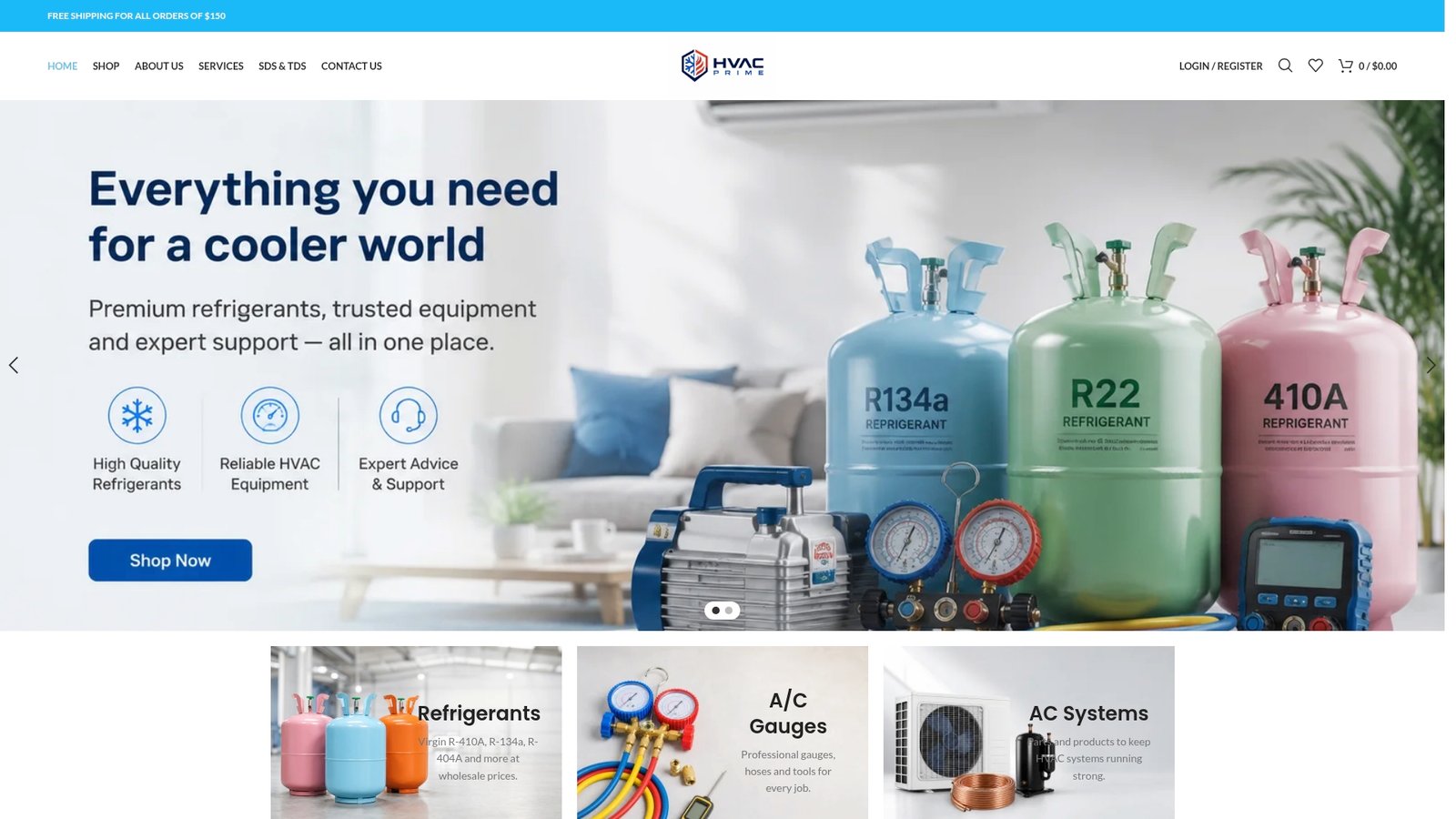
Beyond refrigerants, Hvac-prime carries professional HVAC tools including gauges, vacuum pumps, and refrigerant diagnostics kits that licensed technicians rely on for accurate system startup. For homeowners and property managers ready to book a replacement, Hvac-prime’s certified technicians handle HVAC repair and installation services with full documentation of matched components and warranty paperwork. Request an itemized quote, confirm matched-coil model numbers, and get the job done right the first time.
Sources
- How Much Does It Cost to Replace an Air Handler? 2025 Data | Angi
- How Much Does Air Handler Replacement Cost
- How Much Does an Air Handler Cost? (2026)
- Air Handler Replacement and Installation Cost 2026 – PICKHVAC
- Air Handler Installation Cost and Typical Prices for U.S. Homes 2026 – Quality Home Air Care




 HVAC
HVAC Automotive
 Refrigerant Diagnostics Kit
 Water Heaters